Activists Upset on Bombay High Court's Remarks on Ambedkar Jayanti Celebrations, Say- If His Jayanti is the Concern, Casteist Mentality Must Be Changed.

The court issued notices to the organizers who conducted the event at Samvidhan Square, asking them to answer the "question posed" regarding whether their celebration followed Dr. Ambedkar's principles of civic duty.
The court posed a pointed question to the event organizers, asking whether Dr. Ambedkar, given his life and philosophy, would have approved of such "ritualistic festivities" involving loud noise and disturbance.
Published on

New Delhi – Disappointment and anguish have erupted among Bahujan and Dalit activists following the Bombay High Court's detailed observations on the nature of Dr. Babasaheb Ambedkar Jayanti celebrations at 'Samvidhan Square' in Nagpur. The activists are upset because they believe the court's remarks have singled out their community's celebration, questioning whether it aligns with Dr. Ambedkar's "thoughts," while similar or louder noise during other religious and cultural festivals most notably Ganesh Chaturthi has never drawn such judicial scrutiny.

They argue that if noise pollution is the genuine legal concern, the law must apply equally to all festivals; but if only Ambedkar Jayanti is being targeted for a moral review, then the underlying "casteist mentality" needs to be confronted and changed.

The court posed a pointed question to the event organizers, asking whether Dr. Ambedkar, given his life and philosophy, would have approved of such "ritualistic festivities" involving loud noise and disturbance.
‘We Are Not For Sale’: SC Professor Detained, Humiliated for Refusing to attend Ambedkar Jayanti event – What Really Happened at CURaj?

The Bench of Justice Urmila Joshi-Phalke and Justice Nivedita P. Mehta was hearing a cluster of matters PIL No. 90/2025, PIL No. 8/2025, Writ Petition No. 689/2026, and a Suo Motu PIL No. 16/2025 when the learned Amicus Curiae, Abdul Subhan, apprised the court regarding various activities that had taken place during the celebration of Dr. Babasaheb Ambedkar's Birth Anniversary at "Samvidhan Square."

The Amicus Curiae brought to the court's attention three primary grievances from the event:

Loud noise generated during the celebrations.

Sloganeering at high volume.

Bursting of firecrackers.

The court noted that these activities, particularly when occurring between 10:00 pm and 6:00 am, violate the Noise Pollution (Regulation and Control) Rules, 2000.

"Based on his Life, Philosophy, and Writings, Dr. Babasaheb Ambedkar would likely to have preferred a Birth Anniversary focused on intellectual growth, social reforms and empowerment rather than ritualistic festivities."

The Court's "Thought" on Dr. Ambedkar's Vision

The judges recorded that they were "constrained to give a 'Thought'" on the vision of the Architect and Father of the Indian Constitution. The court observed:

"Birth Anniversaries of our National Heroes are celebrated in our India to honour their contributions and reinforce moral values amongst citizens. These celebrations make a Bridge connecting new generation to ideals and sacrifices. Every year, Birth Anniversary of Principal Architect and Father of our Indian Constitution Dr. Babasaheb Ambedkar is celebrated. This day is not just a celebration of life but a tribute to Legacy of the Visionary Leader and the Social Reformer. "

"Based on his Life, Philosophy, and Writings, Dr. Babasaheb Ambedkar would likely to have preferred a Birth Anniversary focused on intellectual growth, social reforms and empowerment rather than ritualistic festivities. He definitely would have focused on upliftment of downtrodden, women empowerment and eradication of caste based discrimination. Celebrating his Birth Anniversary is not just remembering his words but his vision which laid the foundation of Equality, Justice and Progress of Modern India, and his ideas building an empowered nation and circulate his ideas to the next generation."

The court then posed a pointed question: "Whether these 'Principles' and 'Thoughts', as per expectations of Dr. Babasaheb Ambedkar, are circulated while organizing his Birth Anniversary." The court also asked whether loud noises, especially at night, align with Dr. Ambedkar's expectations, given that such noise disturbs sleep, health, and even impacts birds.

The court balanced two competing rights:

  • Right to Life (Article 21): The court held that this constitutes the most fundamental right, including dignity and health. This right has priority.

  • Right to Celebrate (Articles 25/19): The court acknowledged this as part of cultural expression.

However, the court concluded that celebrations "should not infringe the public health or safety or ambient environmental standards." It quoted U.S. Supreme Court Justice Oliver Wendell Holmes Jr.: "The right to swing my fist ends where other man's nose begins."

Directions issued by the court

The High Court did not stop at observations. It issued the following concrete directions:

The court issued notices to the organizers who conducted the event at Samvidhan Square, asking them to answer the "question posed" regarding whether their celebration followed Dr. Ambedkar's principles of civic duty.

The notices are to be served by the Commissioner of Police, Nagpur, using the records of permissions. The service shall be done through the Senior Police Officer of the concerned Police Station.

The court called for an explanation from the Commissioner of Police, Nagpur, stating: "to explain as to what steps he had taken to protect the rights of general public guaranteed under Article 21 of the Constitution of India."All matters were listed for further hearing on June 9.

Community leaders and Bahujan activists have expressed deep disappointment, not with the existence of noise pollution laws, but with what they perceive as a disproportionate and philosophically loaded scrutiny applied only to Dr. Ambedkar's Jayanti.

In a social media post, anti-caste activist Dr Rehna Raveendran wrote, " Any complaint about noisy Ganesh Chaturthi celebrations? If not, selective targeting against Ambedkar Jayanti celebration is casteist in nature. If noise is the concern, it must be applicable to all festivals. If Ambedkar Jayanti is the concern, casteist mentality must be changed."

Activist Suraj Yengde commented, " i agree! we should implement similar rules for religious festivals that take over the public space for a series of days, and then turn that fiesta into communalism."

Another user shared a traffic jam pic from Ganeshotsav and wrote, " 21,000 policemen were on duty during the immersion and lakhs of people were troubled...but no one filed a PIL!"

 Activists further argue that society's broader casteist mentality manifests in how the same act is perceived differently based on the community performing it: while no one questions the traffic blockade, noise and water pollution during idol immersion processions, a faction has opposed Ambedkar Jayanti celebrations.

Activists argue that this differential perception is rooted in what they call a casteist mentality, the unwillingness to accept Dalit-Bahujan public assertion as legitimate cultural expression. They demand that if the court is genuinely concerned about noise and public health, it must issue a uniform, religion-neutral and festival-neutral directive applicable to all. But if only Ambedkar Jayanti is the concern, then the mindset behind that selective focus must change.

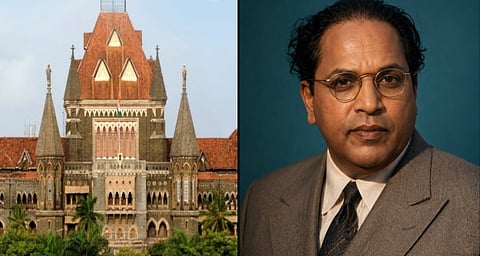
The court posed a pointed question to the event organizers, asking whether Dr. Ambedkar, given his life and philosophy, would have approved of such "ritualistic festivities" involving loud noise and disturbance.
Ambedkar Jayanti Special: Why Ambedkar Remains Outside the Curriculum – The Politics of Exclusion
The court posed a pointed question to the event organizers, asking whether Dr. Ambedkar, given his life and philosophy, would have approved of such "ritualistic festivities" involving loud noise and disturbance.
Who Owns Ambedkar Today: From Dalit Communities to National Politics

You can also join our WhatsApp group to get premium and selected news of The Mooknayak on WhatsApp. Click here to join the WhatsApp group.

Support The Mooknayak

'The Mooknayak' practices democratic journalism. It is a media platform committed to the Constitution, democracy, and social justice. If you also want 'The Mooknayak' to always raise the voices of the marginalized and show the pain of the voiceless, please support us.

Please Contribute
The Mooknayak English - Voice Of The Voiceless
en.themooknayak.com