2 Workers Die Cleaning Septic Tank in Trichy District of Tamil Nadu: DASAM Demands Accountability for Preventable Deaths

DASAM documented 76 deaths in hazardous sanitation work during the past eight months, pointing to a continuing and systemic failure to prevent workers from being exposed to hazardous manual cleaning.
 DASAM is concerned about the manner in which responsibility is frequently evaded after such deaths.
DASAM is concerned about the manner in which responsibility is frequently evaded after such deaths.File Photo
Published on

Trichy- Dalit Adivasi Shakti Adhikar Manch (DASAM) condemns the deaths of M. Ganesh, 25, of Kumbakonam, and Mukesh Kumar, 26, from Bihar, who died of asphyxiation while cleaning a 12-foot-deep septic tank at a house in Annai Nagar, Vadugarpettai, near Kallakudi and Lalgudi, Trichy district of Tamil Nadu.

The two workers died on 2nd September after entering the septic tank while inhaling the poisonous fumes during the septic tank cleaning. As per the reports, Mukesh entered the tank first after reaching the tank floor for cleaning; he became unconscious, and Ganesh entered to rescue him, and both died. They were not provided any safety gear, and fire and rescue services personnel recovered the bodies, and the matter was taken up by Kallakudi police.

Meanwhile, DASAM documented 76 deaths in hazardous sanitation work during the past eight months, pointing to a continuing and systemic failure to prevent workers from being exposed to hazardous manual cleaning.

 DASAM is concerned about the manner in which responsibility is frequently evaded after such deaths.
DASAM Demands End to Caste-Based Exploitation of Sanitation Workers Amid Nationwide Protests

The country already has a constitutional framework protecting dignity and equality, the Prohibition of Employment as Manual Scavengers and their Rehabilitation Act, 2013, statutory safeguards, repeated interventions by the Supreme Court, and established mechanized and scientific methods for sanitation work. The 2013 MS Act prohibits the employment of persons for hazardous cleaning of sewers and septic tanks, and the Supreme Court has repeatedly directed governments to prevent such deaths, ensure compensation and rehabilitation, and promote mechanization and safe practices.

Still, workers continue to enter sewers, manholes, open drains, septic tanks, and other confined spaces and die, raising a fundamental question: If the practice is prohibited by law, judicial directions are already in place, and safer technological alternatives exist, why does hazardous manual cleaning continue

DASAM is concerned about the manner in which responsibility is frequently evaded after such deaths. Registering a case after a worker has died cannot constitute accountability. The investigation must establish who engaged the workers, who was responsible for the cleaning work, why manual entry took place, whether the statutory prohibition was violated, and why safety and mechanized alternatives were not ensured. However, poverty and informal nature of sanitation work must not be used to shift responsibility onto the deceased worker.

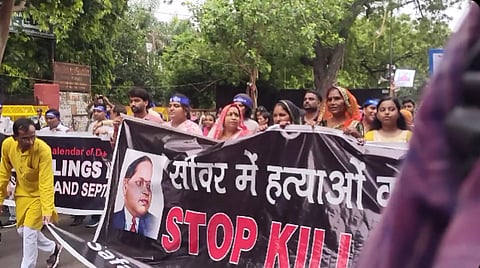
 DASAM is concerned about the manner in which responsibility is frequently evaded after such deaths.
55 Sanitation Workers Killed in Manual Scavenging Operations Across India in 2026 So Far: DASAM

DASAM demands

1. A time-bound investigation into the deaths of Ganesh and Mukesh and identification of everyone responsible for engaging them.

2. Application of the 2013 Manual Scavenging Act and all other applicable laws wherever violations are established.

3. Rs 30 lakh compensation and rehabilitation for each bereaved family, in accordance with applicable judicial directions.

4. An immediate review of septic-tank and sewer-cleaning practices in Tamil Nadu.

5. Strict enforcement of mechanized and scientifically safe cleaning methods and an end to hazardous manual entry.

6. Accountability not only after a death, but also before workers are permitted to undertake prohibited and dangerous work.

7. Transparent documentation of sanitation-worker deaths, investigations, compensation, and prosecutions.

 DASAM is concerned about the manner in which responsibility is frequently evaded after such deaths.
35 Years After Tsunduru: Are We Still Living With the Conditions That Killed Eight Dalits?
 DASAM is concerned about the manner in which responsibility is frequently evaded after such deaths.
Bhim Army Chief Slams IIT Mandi Over 'Casteist' Poster, Urges SC to Enforce UGC Equity Regulations
 DASAM is concerned about the manner in which responsibility is frequently evaded after such deaths.
“Government Itself Has 2.5 Years Left”: Valmiki Leaders Slam 5-Year Probation Clause in Rajasthan Sanitation Workers Recruitment

You can also join our WhatsApp group to get premium and selected news of The Mooknayak on WhatsApp. Click here to join the WhatsApp group.

Subscribe The Mooknayak

'The Mooknayak' practices democratic journalism. It is a media platform committed to the Constitution, democracy, and social justice. If you also want 'The Mooknayak' to always raise the voices of the marginalized and show the pain of the voiceless, please subscribe.

PLEASE SUBSCRIBE US
The Mooknayak English - Voice Of The Voiceless
en.themooknayak.com