Education
'Long March to MoE' on Feb 26: What's Really Brewing at JNU | UGC Equity Regulations 2026
JNUSU's powerful line: "We refuse to study under siege. We refuse to bow to violence."

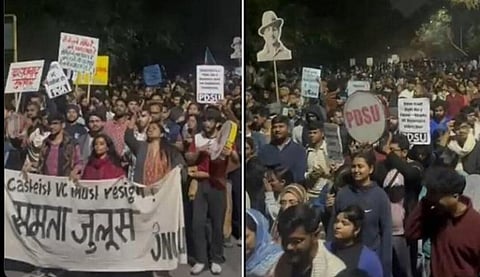

New Delhi- Jawaharlal Nehru University (JNU) is once again at the center of a storm, with tensions boiling over into protests, violent clashes, and now a planned "Long March to MoE" (Ministry of Education) on February 26. Thousands of students are up in arms, boycotting classes, and vowing not to back down until their core demands are met. Here's the full picture of why the campus is erupting.
The controversy ignited from comments made by JNU Vice Chancellor Prof. Santishree Dhulipudi Pandit in a recent podcast interview. Discussing the University Grants Commission's (UGC) new 2026 Equity (Anti-Discrimination) Regulations, she called them "totally unnecessary," "irrational," and an example of "wokeism." More explosively, referring to marginalized groups like Dalits and drawing parallels to Black communities, she stated that communities "cannot progress by being permanently a victim or playing the victim card." She described this as a "temporary type of drug" leading to "permanent victimhood" and hindering real advancement.
The Jawaharlal Nehru University Students' Union (JNUSU) slammed these as "blatantly casteist," "insensitive," and reflective of "Brahminical" or "caste supremacist" attitudes. They argue the remarks dismiss centuries of systemic caste oppression, historical injustices, and the valid struggles of Dalit and marginalized students. Teachers' groups like JNUTA called her analysis "grotesque" and unfit for the role. The VC has defended herself, saying her words were taken out of context, targeted "woke politics" rather than any community, and highlighted her own Bahujan (OBC) background while denying casteist intent.
Protests intensified after JNUSU demanded her apology and resignation. They organized a "Mashal Juloos" (torch procession) for the Rohith Act (a proposed national law to curb atrocities against SC/ST students, inspired by Rohith Vemula's case). Just a day later, on February 1, the administration rusticated the entire JNUSU leadership, including the former president.
Undeterred, students held an "Equality Juloos" (Samta Juloos) on February 22, marching toward the East Gate near the VC's residence. When she didn't address them, the union announced an indefinite class boycott.
The night of February 22-23 turned chaotic. JNUSU alleges ABVP members hurled stones, bricks, and attacked protesters with sticks at the SL-SIS Lawn encampment, injuring several and forcing many to shelter in the Central Library amid a "night of terror." They named specific ABVP individuals as leading the mob and accused campus security and Delhi Police of allowing "organized hooliganism" with impunity.
ABVP and the university administration countered that Left groups provoked the clashes, pressured students to join, and were the aggressors. Both sides filed complaints, police booked JNUSU leaders on rioting and conspiracy charges (based on university FIR), and authorities warned of strict action while insisting classes continue.
JNUSU frames this as part of a nationwide pushback against threats to social justice in education. They link it to similar incidents: assaults on students discussing UGC Equity Rules at Allahabad University, intimidation at Maurice Nagar Police Station over Rohith Act demands, and casteist slogans against a Delhi University professor.
JNUSU has announced a massive "Long March to MoE" starting from JNU on February 26, 2026, appealing to progressive groups, social justice collectives, and constitutional defenders nationwide to join. Key demands include:
1. Resignation of VC Santishree Dhulipudi Pandit
2. Enactment of UGC Equity Regulations 2026 and the Rohith Act
3. Revocation of all rustication orders and withdrawal of the CPO Manual
4. Hostel access until submission, better Mess/Wi-Fi in Barak, increased MCM scholarships (extended to School of Engineering), teacher promotions, and a new Library Annexe Building
5. Removal of alleged ideological influences like Siddhanta Foundation
With accusations flying both ways, police involvement, and a national march on the horizon, JNU's crisis shows no signs of cooling. The campus remains tense as students dig in for what could become a prolonged battle over caste, equity, and free expression in India's premier university.
You can also join our WhatsApp group to get premium and selected news of The Mooknayak on WhatsApp. Click here to join the WhatsApp group.
'The Mooknayak' practices democratic journalism. It is a media platform committed to the Constitution, democracy, and social justice. If you also want 'The Mooknayak' to always raise the voices of the marginalized and show the pain of the voiceless, please subscribe.
PLEASE SUBSCRIBE US