Discussion
Sahil Wakode’s Case: Dalit Grief and Online Caste Violence
The response to Sahil’s death has moved from an exam hall to police detentions and online abuse, while his family’s questions remain unanswered.

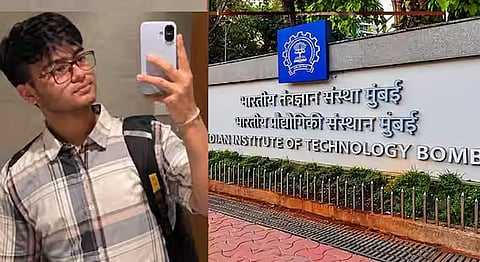

— ✍️Dr Vikrant Kishore
Mumbai- On 25 October, people gathered at Chaityabhoomi with candles to remember Sahil Wakode and demand an inquiry into his death. Mumbai Police detained at least 20 people at the vigil, and reports said Sahil’s parents were among them, those detained were later released. Protesters alleged that police used force and manhandled women, while police said the gathering was unauthorised and did not answer those allegations. I find this sequence troubling because Sahil’s family, still seeking answers, has once more been detained while questions about his death remain unresolved.
The warning signs predated the Chaityabhoomi vigil. On 10 October, Rahul Sonpimple posted on X, “Patience with oppressive delays is complicity,” as Sahil’s parents continued their protest. On 18 October, police cleared and dismantled the protest site near IIT Bombay’s main gate, detaining Sahil’s parents, their lawyer and students before releasing them; protesters said students were dragged and pushed into buses.
The Wire reported a medico-legal certificate recording assault by Powai police, shoulder trauma, an elbow abrasion and an attempted strangulation involving one student, claims and medical observations that still require an explanation. Four days later, 21 IIT Bombay faculty members asked the director who authorised the police action, why students’ belongings had been seized and what response the institute would make to the allegations, as the questions widened from the exam hall to the police station.
Sahil died by suicide in his IIT Bombay hostel on 18 September 2026. Before an inquiry had established what happened, the institute publicly said he had used a mobile phone and ChatGPT to cheat during an examination, then withdrew the statement and apologised three days later for describing events before they had been established. His parents allege that he faced caste-based harassment and a threat of suspension, while IIT Bombay says that no disciplinary action was taken and its director has denied caste discrimination. The institute’s first public account therefore requires scrutiny alongside the family’s allegations and the evidence gathered by investigators.
A police FIR names Professor Suryanarayana Doolla under provisions concerning abetment to suicide and the SC/ST (Prevention of Atrocities) Act, and Doolla has denied the allegations. On 24 September, the National Commission for Scheduled Castes visited IIT Bombay, met the family and police, and directed that CCTV footage, electronic evidence and other records be preserved. IIT Bombay has appointed an inquiry committee, Doolla has been sent on leave while the Mumbai Crime Branch investigates the case, and protests continue as social media activists and a few online journalists report on developments that mainstream outlets have largely overlooked.
Before the inquiry reached a conclusion, IIT Bombay’s Faculty Forum publicly backed Doolla, while Maharashtra minister Pratap Sarnaik said some politicians were giving the case a casteist colour. Yes, a professor is entitled to a fair inquiry, yet public support for him cannot settle the allegations before the evidence is examined. A minister’s suggestion that caste was brought into the case for political reasons can cast suspicion on the family before anyone has properly examined its complaint. The same restraint must apply to every side, with investigators examining the allegations, publishing what the evidence establishes and refusing to treat a Dalit family’s demand for answers as proof of bad faith.
The inquiry must establish what happened in the exam hall, what was said when Sahil was asked to leave, whether he was told to write an apology and whether he was allowed to finish the paper. Investigators should examine the family’s allegations of casteist remarks, any earlier complaints or incidents, witness testimony, CCTV and digital evidence, as well as Doolla’s response. IIT Bombay’s reported 2015 exam procedure called for suspected malpractice to be recorded, a fresh answer book to be issued and the student to be allowed to finish the paper before referral for discipline. After Sahil’s death, the institute put stricter 2026 penalties on hold and issued an interim procedure involving a fresh answer book and a counsellor alert, which makes it fair to ask which procedure applied and whether it was followed.
The number of student deaths at IITs and other elite institutions, and the need to understand how and why they occur, calls for more than routine statements. Parliamentary data reported in September showed that 23 IITs recorded 45 student suicides from 2020–21 through 2024–25, with 28 deaths involving students from SC, ST or OBC communities. The combined figure does not show caste caused each death, nor does it establish the circumstances of any individual case. Sukhadeo Thorat and Khalid Khan’s analysis of 2017–18 data found continuing caste differences in higher education enrolment, while research by Dalit scholars records exclusion and humiliation inside universities. These findings do not prove what happened to Sahil, but they make his family’s allegation worthy of a full and impartial inquiry.
As an academic, I have worked in universities in India, Australia and China, and I have seen that exam rules can be strict without casting a student as a public enemy. China’s national regulations allow expulsion for serious examination cheating, including the use of a communication device, while Australia’s higher education regulator sets out steps for evidence, notice, a chance to respond, support, reasoned decisions and appeal. I am not claiming that every case in either country is handled well, or that their systems can simply be transferred to India. My point is that academic discipline must rest on evidence and a fair process, because public humiliation does nothing to protect academic integrity and can leave a student feeling condemned before the facts have been established.
The charge that Dalits are “playing the victim card” portrays a complaint about unequal treatment as manipulation before the evidence has been examined, and asks the complainant to prove good faith before an institution has investigated. Gopal Guru’s work on humiliation treats it as a political question of equal standing, while Suraj Yengde’s writing asks readers to confront caste as a force that continues to influence and structure social life and privilege. Ambedkar’s critique shows how caste hierarchy is reproduced through everyday relations as well as open declarations of superiority. When Dalits speak about discrimination, the discussion can shift from the conduct they describe to their supposed motives, leaving the complaint itself unexamined.
I have heard merit invoked as though it were a neutral measure, while Dalit students are dismissed as “quota people,” their achievements questioned and their presence treated as evidence of falling standards. The advantages passed down through family wealth, schooling and social networks rarely attract the same suspicion. We should be able to debate reservation policy openly, but calling Dalit and Adivasi students inherently less capable is casteist abuse, not policy analysis. Research by Bagesh Kumar, Rakesh Kumar Maurya and Sukhadeo Thorat documents how Dalit and Adivasi students can face exclusion, humiliation and unequal access in higher education. Their work demonstrates why reports of caste discrimination in a classroom should be taken seriously and examined carefully. It does not establish what happened to Sahil, but it makes dismissing his family’s allegation without an investigation indefensible.
IIT Bombay’s October guidance asks students and staff not to seek information about caste, admission category or JEE and GATE ranks, and bars casteist, sexist and hateful jokes and messages online and in person. The guidance does not establish that Sahil faced discrimination, and the institute must still investigate his family’s allegations. It does make it harder to dismiss the harm that questions and jokes about category, merit and belonging can cause in a university. A rule on paper means little if students expect ridicule when they report abuse, or if a complaint is treated as a threat to institutional reputation. The test is whether the system hears the complaint and examines it fairly.
In the replies to Dalit activist Deepali Salve’s X posts, Sahil’s family’s demand for answers is recast as deceit and performance. Commenters called his parents “greedy,” “liars” and “shameless,” dismissed the protest as “drama,” and labelled participants “paid labourers,” “anti-nationals” and “criminals.” Some used a casteist slur against Dalit protesters, while one wrote that “these goons must be crushed forever,” language that treats repression as something to celebrate. Others mocked reports of women being manhandled and argued that an intelligent student would have left a suicide note, putting Sahil’s death and his family’s grief on trial before an online audience. These are not stray insults with no consequence; they attack the family’s dignity, portray Dalit protest as criminal, and make public assertion look dangerous.11
These comments do not represent every X user or establish what caused Sahil’s death, but they document the abuse plainly. Sahil is declared guilty, his parents are attacked, and people demanding an inquiry are branded frauds while the family’s questions remain unanswered. The “victim card” accusation adds another insult by dismissing the complaint as manipulation and putting Dalit speakers’ motives on trial instead of examining the allegations. The harm is immediate, as a family seeking answers must also face public humiliation, and others watching are told that speaking about caste discrimination may bring a crowd against them.
I cannot dismiss these replies as ordinary online nastiness. A 2021 report documented caste abuse on social media, including attacks on people who speak about reservation, and a 2025 study recorded both the value of digital activism and the hostility Dalit activists face online. The replies to Salve’s posts show how blatant and emboldened this abuse has become in 2026, with casteist slurs, degrading attacks on Sahil’s parents and calls to “crush” protesters. Grieving parents are insulted, Dalit protest is branded criminal, and a demand for an inquiry is met with ridicule. Such language seeks to shame Dalit families for demanding answers and warn others against speaking up.
Social media gives humiliation an immediate audience and a long afterlife, since comments can be copied, searched and revived long after they were posted. The insults do not wait for a study to confirm their harm, they land on people already grieving and tell Dalit activists what may follow when they speak publicly. I do not equate online abuse with physical assault or the public punishments inflicted on Dalits in earlier periods, but the difference does not make digital abuse harmless. It can degrade, intimidate and pressure people to withdraw from public life, even as these same platforms let Dalit activists share testimony, organize support and preserve evidence. They should not have to surrender those spaces to people who use them to silence Dalit voices.
In our 2026 article, Caste Across Borders: Persistence and Transformation in Diaspora, Stephen Goulding, Ratan Lal and I argue that migration does not by itself dissolve caste relations. Caste can persist through social networks, institutions, belonging and exclusion, while Dalit activism develops in new settings. My student film Yathartha, made in 1998, questioned caste in education, and my recent documentary examines resistance to casteism in diaspora communities. My work and experience in India, Australia and China have taught me that a change of place or platform does not by itself undo hierarchy, and that a university’s claims to merit and fairness must be judged against students’ lived experiences and the institution’s own actions.
The inquiry must begin with the exam record, CCTV footage, messages, the alleged apology, witness accounts and the procedures in force on 18 September. It must consider the parents’ allegations alongside Doolla’s denial, set out a clear timeline and state what remains unknown. Police should explain why the Chaityabhoomi vigil was broken up, account for the detentions and respond to allegations that protesters were handled with force. IIT Bombay should explain its initial public statement and the removal of students’ belongings, while authorities protect witnesses and students who report caste abuse from retaliation. These are basic duties in a fair inquiry, not concessions to protesters.
Faculty members are right to insist on due process for a professor, and the same protection must extend to Sahil, his parents and the students supporting them. A colleague’s right to answer an allegation cannot justify closing the inquiry before the evidence has been examined. Even if Sahil was accused of cheating, the inquiry must establish whether he was publicly humiliated and whether the treatment he faced contributed to his death. Universities must enforce exam rules without degrading students, and provide trusted ways to report caste discrimination, prompt investigations and support when a student is in distress. Academic discipline can be firm without degrading a student or making a grieving family a target.
Dalit students do not owe gratitude for admission, and grieving parents do not owe the public a performance of acceptable sorrow. Sahil’s parents have the right to ask what happened, demand an investigation and speak without being branded liars or accused of playing a card. His death cannot be reduced to an allegation of cheating, and his family’s allegations must be examined before they are dismissed. Police action at Chaityabhoomi and abuse online cannot answer the questions the family has raised. Investigate Sahil’s death, stop vilifying his family and make clear in every institution and public forum that Dalit grief is not a crime and Dalit aspirations are not here to be killed.
-Dr Vikrant Kishore is an academic, filmmaker and journalist, currently an Associate Professor of International Communications at the University of Nottingham Ningbo China. He has also worked with Deakin University, RMIT University and the University of Newcastle in Australia. His work includes documentary practice, media research and public engagement, with a focus on caste, identity, social justice and cultural heritage. Through scholarship and filmmaking, he examines how cultural narratives, media practices and diasporic experiences intersect with inequality, power and representation.
You can also join our WhatsApp group to get premium and selected news of The Mooknayak on WhatsApp. Click here to join the WhatsApp group.
'The Mooknayak' practices democratic journalism. It is a media platform committed to the Constitution, democracy, and social justice. If you also want 'The Mooknayak' to always raise the voices of the marginalized and show the pain of the voiceless, please subscribe.
PLEASE SUBSCRIBE US