Discussion
From Promises to Betrayal: How the BJP Turned the Dhangars into Pawns in Cultural Politics
In the 2024 assembly elections, the BJP contested elections on 148 seats. Of them, Dhangar candidates were fielded on only 2 seats.

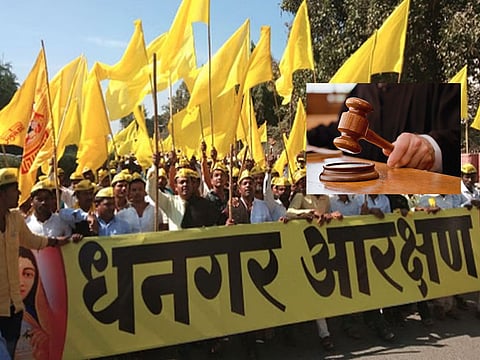
While the general demand for Maratha reservation in Maharashtra has now lost some momentum, the Dhangar OBC community has been pressing for reservation under the Scheduled Tribes category. The Dhangar community's demand for reservation from the ST category is not new. Since the 1960s, the social movement and electoral politics of the Dhangar community have been influenced by this demand. Open-category castes like Jats, Patidars, and Marathas in the country are demanding reservation under the OBC category, while the OBC community is demanding reservation under the tribal category. For example, the Tai Ahom, Chutia, Koch-Rajbongshi, Moran, Matak (Motok), and Tea Tribes (Adivasi) castes in the OBC category in Assam are staging intense agitations in this regard.
While it is seen across the country that promising reservation to various castes as per their demands has become the agenda of electoral politics, social agitation is also taking place in Maharashtra around the demand for reservation. While the Dhangar community is struggling for constitutional justice, a backlog of social justice has been created for the community. It seems that the Dhangar community has become more aware of representation and equal economic policies. However, by invoking exceptional opportunities and cultural justice, the BJP government has only created electoral equations by blowing identity politics on the social backwardness of the community for generations.
When the list of ST castes in Maharashtra was prepared in 1950, it mentioned Dhangad. However, the Dhangar community alleges that we were not included in the ST category due to this grammatical error. However, if this policy intervention is to be done, a decision needs to be taken at the parliamentary level. The state government cannot change the list of ST communities. Similarly, the court cannot direct the government. The process of including a new caste can be completed by passing a law in Parliament. Therefore, the demand of the Dhangar community cannot be fulfilled without the support of the state and central governments.
For the last six decades, the central government has been expected to deliver justice to the community. From this, the Dhangar reservation became a political issue, which proved the value of the Dhangars in electoral politics and made them a power center for social power. But the power center is the political problem, which is happening with the Dhangar community.
In 2003, the then Prime Minister Atal Bihari Vajpayee assured the Dhangar community of reservation in the ST category. Then, during the 2014 Lok Sabha election campaign, Narendra Modi gave an indicative promise in a meeting in Solapur about giving reservation to the Dhangar community. However, after Modi became Prime Minister, the central government did not take any decision in this regard.
In 2014, the BJP government came to power in the state. At that time, Chief Minister Devendra Fadnavis also promised to solve the issue of Dhangar reservation in the first cabinet meeting after coming to power in the state. However, no concrete decision has been taken in this regard by the BJP, which is in power at the Centre and in the state. Despite the constitutional difficulties in this regard and the objections of other tribal communities regarding the social backwardness of the Dhangar community, the politics done by the BJP on the issue of reservation is evident.

Since the demand of the Dhangar community was not resolved, the BJP tried to kill time by temporarily reducing the anger of the community over the past decade. In 2016, the BJP gave the then Mitra Party leader Mahadev Jankar a ministerial post. Vikas Mahatme was given a Rajya Sabha seat. By giving political opportunities to two Dhangar leaders, the BJP secured the support of the Dhangar community and achieved the equations for the 2019 elections.
The agitation for Dhangar reservation resumed before the 2019 Lok Sabha elections. BJP leader Gopichand Padalkar led a statewide agitation against the government and contested the Lok Sabha elections against the party. However, Padalkar later joined the BJP. After that, the BJP gave him a Legislative Council seat in 2020. Before the 2024 Lok Sabha elections, Padalkar once again tried to gain support for Dhangar reservation. He became an MLA from the BJP in the 2024 assembly elections. But now he has given up the leadership of the anti-government struggle.
In the 2019 and 2024 Lok Sabha elections in Maharashtra, the BJP did not field a single Dhangar candidate for the Lok Sabha. In the previous Lok Sabha elections, Mahadev Jankar was the only Dhangar candidate from the Mahayuti, for whom Ajit Pawar had left his own party's seat. But after the shocking results in the Lok Sabha elections, the BJP made caste equations for the assembly elections. Dhangar leader Ram Shinde was given a chance in the Legislative Council. He is currently the Chairman of the Legislative Council. In the recent Rajya Sabha elections, the BJP gave a Rajya Sabha seat to Ramrao Vadkute.
In the 2024 assembly elections, the BJP contested elections on 148 seats. Of them, Dhangar candidates were fielded on only 2 seats. The BJP candidate list reflected Maratha-dominated politics in rural Maharashtra. But the Dhangar community, which is the second largest population after the Maratha community, was given only exceptional opportunities.
In this regard, OBC leader Laxman Hake said that the population of the Dhangar community in Maharashtra is about 10 percent. In about 75 to 80 assembly constituencies, the votes of the Dhangar community are decisive. However, in the last election, the number of Dhangar candidates from all parties was only 10. In the last Lok Sabha election, Mahavikas Aghadi did not field a single Dhangar candidate. Therefore, even after eight decades of independence, there has been no elected Dhangar MP in Maharashtra. Along with the politics of Maratha supremacy, the politics of symbolic OBC representation is responsible.
In 2014, the BJP used the issue of equal political representation for Dhangars as a political agenda. Only BJP leaders who demanded equal representation have become the beneficiaries of the party's symbolic politics. Since leaders of the Dhangar community are becoming cadres of the ruling party, no concrete systemic change is taking place in this regard.
The government's policy regarding the socio-economic development of the Dhangar community and shepherds has also been deceptive. In 2023, the then Finance Minister Devendra Fadnavis announced a fund of 1,000 crores for the Punyashlok Ahilyadevi Maharashtra Sheep and Goat Development Corporation established for shepherds. He also announced that interest-free loans of 10,000 crores would be provided to the youth of the Dhangar community for the growth of their industries through the Economic Development Corporation. However, this fund has not been approved.
The department through which the government intends to implement the announcement for shepherds does not actually have accurate data on shepherds. The Economic Development Corporation has not even appointed a chairman.
According to the data released by the Ahilyadevi Sheep and Goat Economic Development Corporation, not even one percent of shepherds have received the benefits of the schemes. Under the Raje Yashwantrao Holkar Mahamesh Yojana, shepherds are given grants for various business activities. Under this, a target of only 2,240 beneficiaries has been fixed. It has been announced to provide a grazing subsidy for sheep to wandering shepherds. A total of 3,470 beneficiaries are being given benefits under this scheme. For this scheme, and for the land purchase subsidy for sheep and goat rearing, only a total of 1,666 beneficiaries will get the benefit.
Also, 6 crore 66 lakh rupees have been spent on research and the purchase of medicines and resources in health centers to increase the goat and sheep business, which seems to be the highest figure. The total cost of implementation of the schemes announced by the corporation is only 11 crores.
The government does not have policy clarity regarding the registration of shepherds, information about the geographical area of migration of shepherds, and the legal problems faced by shepherds due to the oppressive conditions of the Forest Act. What is especially clear is the clear neglect of the Dhangar people's representatives on this. A total of six members of the Maharashtra Legislative Assembly are not seen asking questions to the government in this regard.
In July 2019, Devendra Fadnavis had approved these schemes in the cabinet meeting, the implementation of which needs to be followed up:
Grant for purchase of land for sheep farming (₹70 crore)
Hostel for deprived Dhangar students on their own land (₹150 crore)
Admission scheme for designated English-medium schools (₹150 crore)
Hostels for students in various parts of the state
10,000 houses for homeless families in the first phase (₹150 crore)
Share capital for cooperative spinning mills (₹50 crore)
Margin money for startup schemes (₹50 crore)
Grazing subsidy (₹100 crore)
Residential training facilities for youth for competitive exams
Financial concessions for competitive exams
Special training scheme for army and police recruitment
The landless, small landowners, and land-owning OBC and Vimukta-Bhatika (VJNT) communities in geographically drought-prone and deficient irrigation areas still have to migrate for their livelihood. The lack of economic transition increases the opportunity gap between mainstream society and the OBC community and reduces opportunities for sustainable employment. In addition, since caste is a traditional profession and Shudra is a varna, the OBC community is seen only as workers due to the service work covered by the varna system.
The situation of the Dhangar community, a traditional shepherd profession in Maharashtra, is no different. The tradition of migrant labor in the Dhangar community is linked to a migratory life. Therefore, economic transition does not benefit from any sustainable beneficial policies in terms of infrastructure, education, health, and employment.
The Dhangar community migrates for sheep farming, transport business, and sugarcane cutting. Along with seasonal migration, the unstable economic status of the Dhangar community makes education a secondary priority. Therefore, generations are trapped in the cycle of unorganized labor. Migration and labor create obstacles in educational progress, due to which the next generations inevitably turn to goat and sheep farming.
Due to the migration process, the dropout rate of students from the Dhangar community is more than half. According to data released by the state government in 2021, the dropout rate of OBC students is about 5 percent. However, this is only government data. Many generations of families from the Dhangar community have not seen the door of a school. Even after eight decades of independence, many families from the Dhangar community have not produced a generation that has completed primary education.
OBC students are not getting highly educated enough even from this group to apply for government schemes, as generations have been deprived of education. The social backwardness of other migrant communities like the Dhangar community is also a reason behind this.
The state government has started the ‘Gagan Bharari’ initiative, which provides free or subsidized coaching for OBC, VJNT, and SBC students for UPSC, MPSC, Banking, and SSC. However, students from the OBC category did not apply for this scheme in sufficient numbers from 2020 to 2022. This shows the response of backward class communities to higher education. Due to such problems, political policy and financial provision are the cause of transformative change.
But considering the lack of financial provision, the government’s policy regarding the economic transition of the shepherd community seems like a pipe dream.
On May 31, 2023, the BJP-led grand alliance government decided to rename Ahmednagar district as Ahilyadevi Nagar. A medical college in Baramati in Pune district was named after Ahilyadevi Holkar. The state government held a cabinet meeting at her native village, Chaudi, in Ahilyanagar district on the occasion of Ahilyadevi Holkar's 300th birth anniversary. One and a half crores were spent for a meeting. In this meeting, a fund of 681 crores was approved for Ahilyadevi's memorial and development plan.
This shows the government's priorities. When the social development plans of the Dhangar community needed financial provision, administrative machinery, and political support, the government emphasized cultural politics. The Devendra Fadnavis government, which announced funds for Ahilyadevi's memorial, has failed to implement the plans announced in its first term.
The BJP government has been reluctant to give power to the Dhangars, from political representation to financial provision. Therefore, the question is whether it is the BJP's commitment to the social development of the Dhangars or the inevitability of taking the Dhangars along. The community, which is being hailed as a political force, still seems far removed from the BJP's agenda in terms of economic and social justice policies.
-The author is a digital journalist from Maharashtra focusing on caste, identity, and public policy, currently studying multimedia journalism at the Asian College of Journalism, Chennai. He has worked with the Times Group, reporting for Maharashtra Times in Mumbai.
You can also join our WhatsApp group to get premium and selected news of The Mooknayak on WhatsApp. Click here to join the WhatsApp group.
'The Mooknayak' practices democratic journalism. It is a media platform committed to the Constitution, democracy, and social justice. If you also want 'The Mooknayak' to always raise the voices of the marginalized and show the pain of the voiceless, please subscribe.
PLEASE SUBSCRIBE US