Remembering a Visionary of Social Justice: Rai Bahadur Arcot Narainaswamy Mudaliar at 199

Mudaliar recognised that social inequality could not be addressed solely through conventional charity. Food and alms might relieve temporary suffering, but education could break cycles of exclusion for generations. This insight made his vision revolutionary for its time.
Mudaliar’s early life was marked by hardship, responsibility, and perseverance.
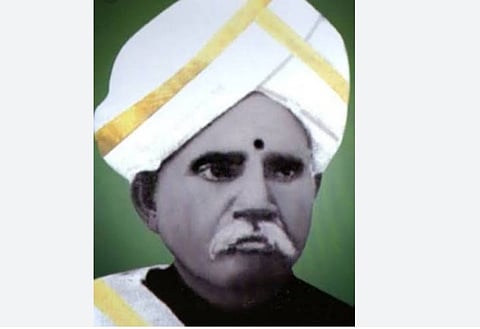
The founder of R.B.A.N.M’s Educational Charities, Dharmarathnakara Rai Bahadur Arcot Narrainsawmy Mudaliar (1827-1910) believed that the propagation of knowledge was philanthropy at its best.Internet
Published on

— ✍️ Dr. Sudhakara Karakoti & Dr. Karamala Areesh Kumar

On May 14, 2026, Bengaluru remembers the 199th birth anniversary of one of its greatest yet underappreciated social reformers, Dharmaratnakara Rai Bahadur Arcot Narrainsawmy Mudaliar (1827-1910). At a time when conversations around inclusive education, social justice, and empowerment dominate public discourse, the life and legacy of this 19th-century philanthropist acquire renewed relevance.

Long before the modern welfare state, affirmative action policies, or the language of social inclusion entered India’s constitutional vocabulary, Narrainsawmy Mudaliar envisioned education as the most powerful instrument of social transformation. His belief that “the propagation of knowledge was philanthropy at its best” was not merely rhetorical idealism; it became the foundation of one of Bengaluru’s oldest and most enduring educational movements — the RBANM’s Educational Charities, founded in 1873.

Born in Arcot in 1827 into difficult economic circumstances, Mudaliar’s early life was marked by hardship, responsibility, and perseverance. The death of his father during his youth and the burden of supporting a large family forced him into trade and entrepreneurship at a young age. Without access to qualitative formal English education, he immersed himself in classical Tamil literature and Saivite philosophy, which shaped his moral outlook and social conscience.

Through determination and business acumen, he rose from being a travelling salesman to becoming one of Bangalore’s leading merchants and contractors. His construction partnership contributed to the building of the iconic Public Offices in Cubbon Park, earning him wealth and recognition as the “Merchant Prince of Bangalore.” Yet, unlike many wealthy elites of his time, Mudaliar refused to distance himself from ordinary people. His philanthropy was deeply rooted in lived realities and social empathy.

To understand the significance of his work, one must revisit the social conditions of 19th-century Bengaluru. Education was largely inaccessible to the poor, girls, backward classes and orphans (Bahujans). There were virtually no institutions offering technical or vocational training, no schools for Panchamas and other socially excluded communities, and very limited opportunities for women’s education. In many ways, access to knowledge itself was a privilege restricted by caste, class, and colonial structures.

Mudaliar recognised that social inequality could not be addressed solely through conventional charity. Food and alms might relieve temporary suffering, but education could break cycles of exclusion for generations. This insight made his vision revolutionary for its time.

From 1872 onwards, he established a wide network of schools, colleges, orphanages, health and welfare institutions that catered to children and youth from marginalised sections of society. The institutions under the RBANM’s Educational Charities Trust opened doors for first-generation learners, low-income families, girls, and socially disadvantaged communities at a time when such efforts were almost unheard of in colonial India.

Importantly, his educational philosophy was holistic rather than narrowly academic. He believed education must nurture moral strength, discipline, cultural rootedness, patriotism, and social responsibility. The RBANM’s educational institutions continue to embody these principles by combining academic excellence with sports, cultural activities, counselling, community engagement, and personality development.

What stands out most in Mudaliar’s legacy is his commitment to dignity and inclusion across caste and class barriers.

Decades before anti-untouchability campaigns became part of India’s national movement, he invested in institutions aimed at uplifting depressed and backward communities. His work anticipated many ideas later associated with social justice movements and constitutional values.

Today, when debates around educational inequality continue to dominate India’s policy landscape, his life offers valuable lessons. Despite constitutional guarantees and expansion in higher education, access remains uneven. Students from economically weaker backgrounds, marginalised castes, and minority communities still face structural disadvantages. Urban poverty, digital divides, rising educational costs, and unequal schooling systems continue to reproduce exclusion.

In this context, the RBANM’s Educational Charitable Trust’s continued focus on affordable, accessible education is deeply significant. For over 150 years, the institution has served Bengaluru’s working classes and first-generation learners, particularly in the Ulsoor region. Its survival and relevance across generations demonstrate that community-driven educational philanthropy can complement state efforts to advance social equity.

Mudaliar’s vision also challenges contemporary philanthropy to move beyond symbolic charity. In an age where corporate social responsibility often prioritises visibility over structural change, his example reminds us that genuine social transformation requires long-term investment in human capability. Education, especially for marginalised communities, remains the most sustainable pathway toward empowerment and democratic participation.

Recognition came to him during his lifetime through titles such as “Rai Bahadur” from the British imperial administration and “Dharmaratnakara” (Ocean of Charity) from the Maharaja of Mysore. Yet, his true memorial lies not in honours but in the countless lives transformed through education.

As Bengaluru evolves into a global technology hub, the city must not forget those who laid the moral foundations of its social development. Rai Bahadur Arcot Narrainsawmy Mudaliar belongs to that rare tradition of institution-builders who saw education not as privilege, but as a public good capable of reshaping society itself.

On his 199th birth anniversary, remembering him is not merely an act of historical tribute. It is an opportunity to reaffirm the enduring ideals of social justice, inclusive education, and compassionate public service, which remain as urgent today as they were in the 19th century.

About the Authors:

- Dr. Sudhakara Karakoti is a Professor of Political Science at Department of Arts, RBANM’s First Grade College, Bengaluru.

-Dr. Karamala Areesh Kumar is the Head of the Department of International Relations, Peace and Public Policy (IRP and PP), St Joseph’s University, Bengaluru.

Mudaliar’s early life was marked by hardship, responsibility, and perseverance.
Will the 'Public View' Clause Become a New Barrier to Dalit Justice? The SC Ruling That Has Left the Bahujan Community Worried
Mudaliar’s early life was marked by hardship, responsibility, and perseverance.
They Slut-Shamed Her in a Boys Hostel Corridor. The Committee Told Her She Should Have Reconciled.
Mudaliar’s early life was marked by hardship, responsibility, and perseverance.
Proud Moment: When a Caste-Humiliated IIMB Professor Rises to #1 in India, Top 20 Worldwide

You can also join our WhatsApp group to get premium and selected news of The Mooknayak on WhatsApp. Click here to join the WhatsApp group.

Support The Mooknayak

'The Mooknayak' practices democratic journalism. It is a media platform committed to the Constitution, democracy, and social justice. If you also want 'The Mooknayak' to always raise the voices of the marginalized and show the pain of the voiceless, please support us.

Please Contribute
The Mooknayak English - Voice Of The Voiceless
en.themooknayak.com