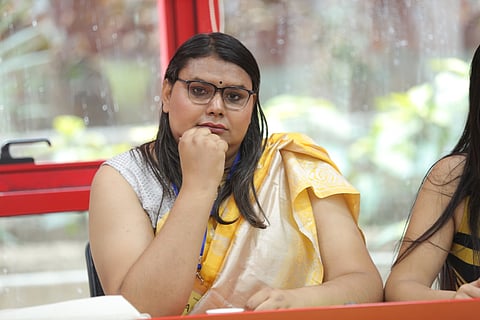
New Delhi: Even decades after India gained independence, a section of society had to wait a long time to claim the right to live with dignity and equality, with its identity recognised in its own country. The Supreme Court’s landmark NALSA judgment in 2014 laid a new constitutional foundation for the transgender community by recognising their identity and affirming their rights to dignity and equality.
But has constitutional recognition alone changed society’s attitudes? Can educated and qualified transgender women find employment without facing humiliation or discrimination because of their gender identity?
The answers to these questions lie in the life of Jane Kaushik, the transgender woman whose petition led the Supreme Court, on October 17, 2025, to deliver a significant judgment in Jane Kaushik v. Union of India, addressing discrimination against transgender persons in employment, institutional accountability and the responsibilities of governments to frame inclusive policies.
The woman whose legal battle sparked a nationwide debate on the employment rights of transgender people in public and private institutions had herself faced repeated humiliation and rejection while trying to secure a job. When she went to teach at a school in Lakhimpur Kheri, Uttar Pradesh, she was allegedly pressured to resign. Later, despite being selected by another school in Jamnagar, Gujarat, she was not appointed. According to Jane, the school's decision changed after its management became aware of her transgender identity.
Today, Jane works as an English teacher at a private school near Jaipur in Rajasthan. Even there, the beginning was not easy. But her fight is about more than securing a job for herself. She wants future generations of transgender people to be able to work without hiding their identity or depending on the goodwill of an employer.
Jane has been selected for the ‘Fight for Justice Awards’, presented by the Delhi High Court Bar Association. She will be honoured at a ceremony scheduled for December 4.
In a heart-to-heart conversation with The Mooknayak, Jane spoke about the experiences that shaped her struggle. Describing the recognition as deeply meaningful, Jane said it would inspire her to continue her journey of standing up for justice, equality, dignity and the rights of the transgender community.
Her account highlights not only the legal significance of the Supreme Court's judgment but also the wide gap between rights guaranteed on paper and equality experienced in everyday life. Her experiences reveal the realities that transgender people continue to face in the employment sector, even after a judgment widely regarded as a major legal victory for equality.
To understand Jane's story, it is important to look at her educational journey. She was not seeking employment without the necessary qualifications. She graduated in Rajasthan in 2016, completed an advanced diploma in Nursery Teacher Training in Haryana in 2017, and earned a postgraduate degree in Political Science from Gujarat in 2018. In 2019, she underwent gender-affirming surgery, and in 2020, she enrolled in a Bachelor of Education (B.Ed.) programme at a university in Uttar Pradesh.
Her ambition was to become a teacher, and she had worked towards acquiring the required academic qualifications. In November 2022, she was selected as a Trained Graduate Teacher (TGT) in English and Social Science at Umadevi School in Lakhimpur Kheri, Uttar Pradesh.
But her life changed within just eight days of joining the school. Jane worked there from November 25 to December 2, 2022. During this period, she says, she faced taunts, body-shaming and humiliating behaviour from colleagues and students because of her gender identity.
On December 1, she complained to the school principal. The principal reportedly assured her that the matter would be discussed with the concerned teacher and that she would be supported. However, Jane alleges that after a student learnt about her transgender identity on December 3, the school management began pressuring her to resign.
Speaking to The Mooknayak, Jane recalled, “The way the principal humiliated me in front of two male staff members, you can imagine what my situation must have been at that moment. I kept pleading with her to let me continue working. I asked her, if I was not even allowed to work, how would I sustain myself? But nobody was willing to listen to me.”
She was allegedly told that if she did not resign, her payment for the eight days she had worked would be withheld. In her resignation letter, she also stated that the school management was unwilling to allow an openly transgender person to continue working there.
On December 5, the school emailed her accepting her resignation. The email cited weak performance in Social Science as the reason, even though the school acknowledged in the same communication that she had a good command of English.
Jane says she had to return home by bus late at night after leaving the school. There were no women passengers on the bus initially, and she remained frightened throughout the journey.
“I was very scared. I felt some relief only when two women boarded the bus at Shahjahanpur. I can never forget the fear I experienced that night,” she said.
According to Jane, the school initially refused to give her a relieving letter. She recorded a video describing her experience and shared it on social media. The National Commission for Women (NCW) took suo motu cognisance of the matter and issued a notice to the concerned Uttar Pradesh secretary, seeking action. On December 8, 2022, the school sent her a defamation notice claiming Rs 1 crore. Jane replied to the notice on December 28.
After her experience in Lakhimpur Kheri, Jane hoped that a different city and institution might give her an opportunity to work on the strength of her qualifications. She was selected by a private school in Jamnagar, Gujarat.
But that opportunity, too, ended in disappointment.
Jane says that when she contacted the school's human resources department regarding her appointment, she requested them to arrange a hotel for her upon arrival. The HR department asked her to provide her Aadhaar card for the booking.
“I gave them my Aadhaar card so they could book the hotel. After that, suddenly, there was no response from their side. Some time later, I received a call from HR, and they started expressing their displeasure. They told me that Jamnagar was a small town and that people there had a narrow mindset. Parents, children and the school community would not accept a transgender person as a teacher. They even said that having me as a teacher would damage the school's reputation,” she recalled.
According to Jane, the school made it clear that it did not want to appoint her.
Having lost employment opportunities at two different schools, Jane decided that she would no longer remain silent. For her, this was not merely a personal employment dispute; it was a question of the constitutional equality guaranteed to every citizen.
Jane said, “The Constitution guarantees us equality in every sphere, but society is not willing to give us that equality. I realised that if I did not fight for my rights, the path would not open up for other transgender people either. That is why I decided to pursue a legal battle.”
Her lawyers took up the case pro bono, without charging her any fees. Jane says her legal team collected all available evidence to build a strong case.
“We submitted emails, WhatsApp messages, call recordings and all other relevant documents before the court. We tried to establish how employment opportunities were closed to me after my gender identity became known. We had evidence to support everything,” she said.
Jane's petition was registered in the Supreme Court as Writ Petition (Civil) No. 1405 of 2023. On January 2, 2024, a three-judge Bench headed by the then Chief Justice issued notice in the matter. The Court was informed that Jane's employment at schools in Uttar Pradesh and Gujarat had been affected after her transgender identity came to light.
The Supreme Court judgment records the events relating to the second school. The Court noted that despite issuing an offer letter to Jane, the school did not allow her to join and subsequently refused to appoint her. The institution failed to provide a satisfactory explanation for withholding the appointment.
The Court held that the reasonable conclusion from the available facts was that the school had refused to employ Jane after discovering that she was transgender. It characterised the conduct as mala fide and made it clear that discrimination against transgender persons is impermissible even at the recruitment stage.
After the legal proceedings, the Supreme Court delivered its judgment on October 17, 2025. The Bench comprised Justices J.B. Pardiwala and R. Mahadevan.
The judgment is significant because the Court did not restrict the right to employment of transgender persons to a mere statutory prohibition against discrimination. It also underlined the positive responsibilities of institutions and governments to ensure equality in practice.
In its landmark 2014 judgment in NALSA v. Union of India, the Supreme Court recognised transgender persons as a third gender and affirmed their fundamental rights, dignity and equality. The Transgender Persons (Protection of Rights) Act was subsequently enacted in 2019. However, complaints of discrimination in employment continued despite the law.
In Jane Kaushik v. Union of India, the Supreme Court highlighted this gap between legal recognition and the lived reality of transgender people. The judgment questioned whether, more than a decade after NALSA, transgender persons were actually able to live with dignity. It expressed serious concern over governmental inaction and the continued marginalisation of the community in employment, education and social life.
Some of the key aspects of the judgment are:
1. Private institutions are also accountable for preventing discrimination: The Supreme Court clarified that the Transgender Persons (Protection of Rights) Act, 2019 places responsibilities on both private and government establishments to prevent discrimination. The law is not limited to government institutions; private schools and other establishments are also covered.
2. Discrimination at the recruitment stage is prohibited: The Court emphasised that Section 9 of the Act prohibits discrimination against transgender persons in matters relating to employment. This includes recruitment, promotion and other employment-related matters.
3. Equal Opportunity Policy is mandatory: Under Rule 12 of the 2020 Rules, establishments are required to formulate an Equal Opportunity Policy for transgender persons. Workplaces must be safe and free from discrimination. The policy must address basic facilities, toilets, safety, transport and the confidentiality of employees' gender identity.
4. Appointment of a Complaint Officer: Under Section 11 of the Act, every establishment is required to appoint a Complaint Officer so that transgender employees can report discrimination or harassment.
5. Protection and welfare mechanisms in states: The Court directed every state and Union Territory to establish Transgender Welfare Boards, Transgender Protection Cells and grievance-redressal mechanisms. It also directed the creation of a national toll-free helpline.
6. Committee to frame a National Equal Opportunity Policy: The Supreme Court constituted an advisory committee chaired by former Delhi High Court judge Justice Asha Menon. Transgender rights activists Akkai Padmashali, Grace Banu and Vijayanti Vasantha Mogli, among other experts, were included. The committee was tasked with preparing an Equal Opportunity Policy for employment and education and identifying gaps in the implementation of the law.
7. Compensation: The Supreme Court directed the private school to pay Jane compensation of Rs 50,000. It also directed the Union Government, the Uttar Pradesh Government and the Gujarat Government to pay Rs 50,000 each for their inaction and failure to provide an adequate grievance-redressal mechanism. The total compensation amounted to Rs 2 lakh.
The judgment brings discrimination in employment within the framework of constitutional equality and legal accountability, rather than treating it as merely a private decision by an employer.
Even after securing such a significant judgment, Jane believes that much more needs to be done to bring about a real change in the lives of transgender people.
According to her, court orders and laws will have meaning only when governments implement them on the ground.
“I still maintain that even after the judgment in Jane Kaushik v. Union of India, employment has not become a right for transgender people. It still depends on the employer's will or mercy. If someone feels that we should be given a job, they will give it to us; otherwise, the doors remain closed. In many places, we are treated as if we do not even exist,” she said.
She believes that appeals for social acceptance alone are not enough to bring the transgender community into the mainstream. Concrete opportunities in education and employment are essential.
“How can we become part of the mainstream? Through education and employment. If we are not given opportunities to study and work, how can we change our lives? We need horizontal reservation for this,” Jane said.
She argues that transgender people should have horizontal reservation in government jobs so that employment opportunities do not remain dependent on the personal attitudes of individual employers. This is one of her key demands. The Supreme Court, in its judgment, constituted an advisory committee to work on an Equal Opportunity Policy and other institutional measures. The demand for horizontal reservation, however, remains Jane's advocacy and was not itself granted through this judgment.
After facing discrimination at two schools, Jane is currently working as an English teacher at a private school near Jaipur in Rajasthan. She has been working there for around four months.
She says that even at this school, students initially looked at her differently and made remarks that made her uncomfortable. However, the situation gradually changed.
“When I started teaching here, the children looked at me differently and made comments. But it has now been four months. They see me as an English teacher. They treat me just like the other teachers. My presence has gradually become normal for them,” she said.
Jane says her colleagues behave professionally with her, although she does not know what their personal opinions might be. She adds that while the school has allowed her to work, the management was not particularly comfortable when it first learnt about her identity.
“I am a visible trans woman. My face and personality make my identity apparent. When the school came to know about me, they were not very happy, but they allowed me to work,” she said. Jane also believes that if she had disclosed her gender identity before being appointed, she might not have been hired by this school either.
Her experience highlights the difference between getting a job at an institution and being able to work there with dignity and without discrimination. Even though she has found some degree of acceptance at her workplace, Jane says that the attitude of society outside the school continues to remind her that transgender people are still not treated as equals. “People do not even consider us human beings. They do not see us as their equals. When we step out on the street, people look at us as if we are something strange,” she said.
She recalled an incident that left her deeply hurt.
Jane was travelling on a bus when she noticed a young boy quarrelling with his sister. As a teacher, she intervened and asked him not to fight. But the boy responded with a sarcastic remark.
“He said, ‘This is a kinnar. What can she possibly do to me?’”
For Jane, the incident reflects how derogatory attitudes towards transgender people can become part of children's behaviour from an early age.
She says society has confined transgender people to a few stereotypes.
“People have created only a few images of us in their minds. They think transgender people either beg at traffic signals, engage in sex work or visit homes to seek badhai. Until society sees us teaching in schools, working in offices and performing our responsibilities in different professions, how will its mindset change?” she asked.
Jane questions how transgender people can be expected to live with dignity when society is unwilling to recognise them as ordinary human beings and equals.
For Jane, the NALSA judgment was not merely a judicial order; it marked the beginning of freedom for the transgender community.
She said, “India became independent in 1947, and people gained freedom. But the transgender community received its real freedom after the NALSA judgment in 2014. For the first time, our identity, rights and dignity received constitutional recognition.”
However, Jane believes that after the legal recognition of identity and dignity, the next struggle is for economic independence.
According to her, NALSA opened the way, and the Supreme Court's judgment in the Jane Kaushik case took an important step towards fixing institutional accountability against employment discrimination. But unless government policies, reservation, education and employment opportunities become a reality, the dream of equality for transgender people will remain incomplete.
Her own life bears witness to this contradiction. The woman who fought in the country's highest court for the employment rights of transgender people is still struggling to secure her livelihood even after the judgment.
Jane's struggle is no longer confined to a court verdict. She is waiting for the day when a transgender woman will not have to hide her identity to get a job; when a school will not fear that employing a transgender teacher will damage its reputation; and when a child's perception of a teacher will be shaped by her ability and qualifications rather than her gender identity.
Because, in Jane's words, a job should never be an act of charity or mercy. It should be recognised as part of the right to equality.
You can also join our WhatsApp group to get premium and selected news of The Mooknayak on WhatsApp. Click here to join the WhatsApp group.
'The Mooknayak' practices democratic journalism. It is a media platform committed to the Constitution, democracy, and social justice. If you also want 'The Mooknayak' to always raise the voices of the marginalized and show the pain of the voiceless, please subscribe.
PLEASE SUBSCRIBE US