TM Special | When Humiliation Becomes “Normal”: India Bhimraya’s First Film ‘JAAT’ Shows How Caste Seeps into Everyday Life

'India Bhimraya', a documentary series consisting of six films, weaves together the narratives of caste, displacement, social movements, and the frontiers of the forest. The first film will premiere in France on December 1st.
The series is a story of six films, twenty years of filming and repeated returns. In it, lives shaped by caste, displacement, development and resistance are seen within contemporary India.
The series is a story of six films, twenty years of filming and repeated returns. In it, lives shaped by caste, displacement, development and resistance are seen within contemporary India.pic: indiabhimraya.org
Published on: 

“I used to drink water from above.”

(This implies the person was not allowed to touch the water source or vessel, so water had to be poured into his hands from a height, which meant he could never touch it, a daily reminder of his caste-assigned status).

This is not the headline of a news report. It is a child’s memory. It belongs to the childhood of Uttam Kamble, a Dalit writer and journalist, in which touching water was forbidden, work was decided in advance, and food came only after everyone else had eaten. What deserves attention is that this memory contains no riot and no event that would make a headline. There is only a water vessel, a school classroom, a name. And that is exactly what is most unsettling, because when humiliation becomes a daily habit, it stops feeling like humiliation. It becomes “normal.”

JAAT is an attempt to put this “normality” on screen. It is the first film in India Bhimraya, a documentary series of six films built from more than twenty years of filming and fieldwork. Directed by sociologists Joël Cabalion and Mrina Reebye, the film does not treat caste as an abstract “social issue.” It follows caste into names, into school meals, to sources of water, to temple gates, into village lanes, and into a song.

JAAT runs 150 minutes and is in Marathi and Hindi, with subtitles in English and French. The film is still in post-production, and its premiere will be held on 1 December at 7 p.m. at the Thélème Cultural Hall, University of Tours.

What exactly is ‘India Bhimraya’?

The project is the work of the French sociologists Joël Cabalion and Mrina Reebye. The series is a story of six films, twenty years of filming and repeated returns. In it, lives shaped by caste, displacement, development and resistance are seen within contemporary India.

Its most distinctive feature is its method. Social and environmental conflicts are usually shown as an “event”: a movement, an eviction, a protest, and then the camera moves on. India Bhimraya does the opposite. The series stays with people and communities over long periods, returns again and again to the same villages and families, and films a society as it changes.

The series is centred on Vidarbha, in Maharashtra. Families displaced by the Gosikhurd dam are rebuilding homes, livelihoods and social worlds in new settlements there, and caste and inequality persist in those settlements too. From here the series moves outward: towards the forests and conservation frontiers of Tadoba and Umred–Karhandla, where wildlife, protected areas and forest governance reshape what livelihood and belonging mean, and then towards the Himalayan foothills.

The name ‘Bhimraya’ is linked to Dr Bhimrao Ambedkar. In August 2026, at India Gate in Delhi, among friends and families, Uttam Kamble, the narrator of the series, explained what the name means. In essence, the idea is that Ambedkar should be reclaimed not merely as the memory of one minority community, but as part of India’s shared political language. This idea has long been carried forward in the series through the Bhim songs that echo through it.

Six films, one journey

The series begins in Vidarbha, where families displaced by the Gosikhurd dam are rebuilding homes, livelihoods and social worlds in new settlements, and where caste and inequality endure. The story then spreads outward, to the forests and conservation frontiers of Tadoba and Umred–Karhandla, and then towards the Himalayan foothills.

The six films run in this order: Jāt (Caste), Visthāpan (Displacement), Āndolan (Movement), Dharan (Dam), Śētakarī Kaṣṭakarī (Farmer–Labourer) and Junglāt (The Forest Frontier). The first two films form a pair. Jāt asks how caste organises a village from within, that is, its spaces, bodies, hierarchies and possibilities. Visthāpan asks what happens when that same entire social world is uprooted and scattered and has to start again from scratch.

JAAT is certainly a film about caste, but even more so a film about dignity, inheritance and the difficult work of becoming free.
JAAT is certainly a film about caste, but even more so a film about dignity, inheritance and the difficult work of becoming free.pic: indiabhimraya.org

‘JAAT’: Caste is not an event, it is a structure

The first film opens at Dikshabhumi in Nagpur, where in October 1956 Ambedkar embraced Buddhism along with hundreds of thousands of people. The film counts this among the great collective refusals of modern India. Every year the crowds return, flags are raised, songs echo, and history does not remain mere remembrance but opens again as an unfinished demand for equality. From here the film carries Ambedkar’s 1953 BBC interview and its warning to the present day. The gist was that in a society marked by deep inequality, political democracy cannot endure. The film asks what democracy means when humiliation can be taught in childhood, enforced through custom, and dissolved into everyday gestures.

The human centre of the story is Uttam Kamble. His memories move back and forth between humour and violence, tenderness and revolt. A mother giving birth while working in the fields, a dangerous pilgrimage undertaken to save a sick child, the work assigned to a Mahar family, and the boy beaten at school for touching a water vessel, the same boy whose sharp intelligence everyone later comes to trust. He tells these things without self-pity, with irony, anger and the precision of a man who has spent a lifetime refusing to accept the place assigned to him.

The film keeps returning to Ambhora, a village in eastern Maharashtra, where caste can be read in the layout of houses and river ghats, in memories of separate cups, and in changing friendships, marriages and family decisions. Here change is neither denied nor declared complete. Old boundaries retreat in places, survive in others, and sometimes return in unexpected forms.

In Nashik the conflict reaches public and sacred spaces, where the history of Ambedkar’s Kalaram temple movement returns not as a legacy but as a living question: who may cross the threshold? The voice of the Lodhi farmer Maniram Narvare and the powerful performance of the Ambedkarite singer Prakashnath Patankar complicate any simple story of liberation. Kabir, Buddha, the caste system, village deities and Ambedkar himself appear together in one restless landscape. The film suggests that conversion can change institutions and identities, but that the inner world changes more slowly. Throughout the film, songs run like a second archive, carrying hunger, education, dignity, anger and hope from one generation to the next.

 In Visthāpan and Āndolan, Vilas Bhongade, a key organiser of the Gosikhurd movement, explains how scattered grievances turned into collective demands, how committees were built by going from village to village, and why rehabilitation must mean more than a change of place: it must mean a life worth living.
In Visthāpan and Āndolan, Vilas Bhongade, a key organiser of the Gosikhurd movement, explains how scattered grievances turned into collective demands, how committees were built by going from village to village, and why rehabilitation must mean more than a change of place: it must mean a life worth living. pic: indiabhimraya.org

Dams, movements and the question of ‘Junglāt’

The remaining five films are still in production. In Visthāpan and Āndolan, the voice of Vilas Bhongade, a key organiser of the Gosikhurd movement, is central. He explains how scattered grievances turned into collective demands, how committees were built by going from village to village, and why rehabilitation must mean more than a change of place: it must mean a life worth living. Within the same story, the farmer Maniram presents land as more than property: as livelihood, status, memory and dignity, and with dry humour he exposes the gap between rehabilitation on paper and life as it is actually lived. Dharan deals with dams and irrigation infrastructure, while Śētakarī Kaṣṭakarī deals with the relationship between farmers and farm labourers and the agrarian crisis.

For groups working on conservation and coexistence, such as the Coexistence Consortium, the most relevant film is the sixth, Junglāt. It brings together long-term footage of the Corbett region, Van Gujjar settlements, Tadoba-Andhari Tiger Reserve and villages in Maharashtra living with increased tiger presence. The film treats coexistence not simply as a relationship between people and wildlife, but as a social and political question: who is expected to coexist, under what conditions, and with what resources, risks and rights.

Its material includes forest evictions and resettlement, buffer-zone settlements, compensation and livelihood questions, pastoral communities, conservation-induced displacement and village experiences of living alongside tigers. Vilas Bhongade’s story connects displacement to caste, labour, land and forest rights, carrying the viewer to this very film. In other words, the vision of development that removed villages for dams reappears in another form at the edges of conservation areas.

Hundreds of hours of footage, interviews, songs and archival material have already been gathered, and the challenge now is not to start the project but to turn this extraordinary archive into six finished films
Hundreds of hours of footage, interviews, songs and archival material have already been gathered, and the challenge now is not to start the project but to turn this extraordinary archive into six finished filmspic: indiabhimraya.org

Faces seen together on screen for the first time

The series brings into one frame people who are not ordinarily seen together: Ambedkarite thinkers and displaced farmers, singers and organisers, engineers and ecologists, domestic workers and movement leaders, and families filmed across generations.

Dr B. R. Ambedkar: The deepest political horizon of the series. His BBC voice opens the series.

Uttam Kamble: Writer, editor-journalist and narrator of the series. From his early work with dam-displaced people to anti-superstition struggles, he connects personal experience to larger social structures.

Parmeshwar: A displaced farmer and Bhim song singer from Ambhora, whom the camera has watched for years in fields, home and song. He is the living link between the old village, the resettled world and the family’s future.

Vilas Bhongade: A key organiser of the Gosikhurd movement. He insists that rehabilitation must mean more than changing places: it must mean a life worth living.

Maniram: A displaced farmer who, with dry humour, exposes the distance between rehabilitation on paper and real life.

Anand Teltumbde: A renowned sociologist and writer, who argues that caste cannot be confined to statistics alone.

Charan Bhimrao Jadhav, Shirish Pawar and Prakashnath Patankar: Ambedkarite singer-performers for whom song is memory, debate and public education all at once.

The people of Ambhora and the family: A family of three generations who have appeared in the series for more than twenty years. Naming ceremonies, weddings, births, meals, journeys and old age: from these ordinary moments the longest human thread of the film has been woven.

India Bhimraya, a six-film documentary series built over 20 years, begins with JAAT, a film on how caste becomes ordinary.

Behind the screen

L’Atelier Bhimraya is an organisation whose purpose is to record, preserve and share the lives and stories of people who are usually left out of the larger debates. Through documentary films, long-term fieldwork, archival research, translation, public events and collaborative cultural projects, it brings together in one place the images, voices and histories connected to caste, displacement, rural change, social movements, inequality and collective resistance.

The organisation rests on long-standing collaboration between France and India, and connects research, art and public debate with one another. Its aim is not limited to India. It wants South Asia and France to connect through big questions such as dignity, equality and social justice. It also wants to build a permanent home for records, encounters and frank, critical storytelling.

Mrina Reebye is its president and co-director, Joël Cabalion is secretary and director, and Burhan Aliti is treasurer, who has been working with communities in marginalised urban neighbourhoods for two and a half decades. Joël is a sociologist at the University of Tours and has carried out more than twenty years of research in Vidarbha. He was based at the Centre de Sciences Humaines in New Delhi from 2009 to 2013 and again from 2022 to 2026.

Hundreds of hours of footage, interviews, songs and archival material have already been gathered, and the challenge now is not to start the project but to turn this extraordinary archive into six finished films. For JAAT, the remaining work is editing, sound, colour grading, subtitling and rights clearance. For the whole series, the team is raising funds for editing, sound, colour grading, translation, subtitling, rights clearance and future circulation.

News about caste, dams, forests and farms comes often in India, but it usually remains a one-day headline. India Bhimraya is an attempt to look at the life that follows that headline. In the filmmakers’ words, JAAT is certainly a film about caste, but even more so a film about dignity, inheritance and the difficult work of becoming free.

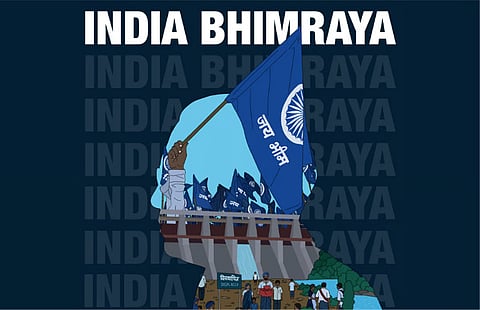
The series is a story of six films, twenty years of filming and repeated returns. In it, lives shaped by caste, displacement, development and resistance are seen within contemporary India.
How Caste Discrimination Persists Within Australia's Hindu Diaspora | The Hidden Hierarchy
The series is a story of six films, twenty years of filming and repeated returns. In it, lives shaped by caste, displacement, development and resistance are seen within contemporary India.
Sanitised Republic: Cast(e) & Contracts: How a Film on Caste and Contract Labour Was Blocked From Kerala’s Documentary Festival | TM Exclusive
The series is a story of six films, twenty years of filming and repeated returns. In it, lives shaped by caste, displacement, development and resistance are seen within contemporary India.
AIISCA’s Janta Adalat on Caste Discrimination and Institutional Accountability in Higher Education to be held in Nagpur on 22 November
The series is a story of six films, twenty years of filming and repeated returns. In it, lives shaped by caste, displacement, development and resistance are seen within contemporary India.
TM Exclusive | No Nodal Officers, No SOP: Rajasthan Social Boycott Prevention Campaign Questions Raj Govt on Implementation of High Court Order Against Caste Panchayat Boycotts

You can also join our WhatsApp group to get premium and selected news of The Mooknayak on WhatsApp. Click here to join the WhatsApp group.

Subscribe The Mooknayak

'The Mooknayak' practices democratic journalism. It is a media platform committed to the Constitution, democracy, and social justice. If you also want 'The Mooknayak' to always raise the voices of the marginalized and show the pain of the voiceless, please subscribe.

PLEASE SUBSCRIBE US