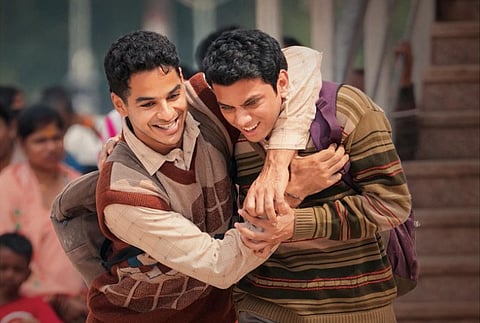
New Delhi – In a milestone for Indian cinema, Neeraj Ghaywan's poignant drama Homebound has been shortlisted for the Best International Feature Film category at the 98th Academy Awards, announced earlier this week. Selected as India's official entry in September, the film, produced by Karan Johar’s Dharma Productions and executive produced by Martin Scorsese, now advances alongside 14 other global contenders, vying for a nomination in the March 2026 ceremony.
With a staggering 97% critics' score on Rotten Tomatoes, Homebound is rapidly capturing hearts worldwide, sparking conversations on caste, religion, and resilience amid the COVID-19 lockdown. As audiences flock to Netflix following its November 21 streaming debut, the film's raw authenticity has ignited widespread praise from prominent critics, activists, artists, and writers, positioning it as a frontrunner in a competitive field.
At its core, Homebound weaves a heartbreaking narrative inspired by a 2020 New York Times essay by journalist Basharat Peer, chronicling the harrowing journey of two childhood friends from a rural North Indian village during India's brutal pandemic lockdown. Chandan (Vishal Jethwa), a Dalit aspiring police constable, and Shoaib (Ishaan Khatter), a Muslim delivery worker, dream of escaping poverty and discrimination through the uniform's promise of dignity. As they navigate a grueling trek home, hitching rides on trucks and enduring dehydration, fever, and societal prejudice, their unbreakable bond frays under the weight of caste divides, religious tensions, and economic despair. Janhvi Kapoor shines in a pivotal supporting role as Shoaib's steadfast partner, adding layers of emotional depth to this urgent portrait of marginalized lives.
The film's ascent to Oscar contention has been met with effusive acclaim from India's creative and activist circles, underscoring its role as a mirror to the nation's unspoken fractures. Renowned film critic Anupama Chopra, in her Hollywood Reporter India review, declared Homebound "the best Hindi film of 2025 so far," praising Ghaywan's transformation of Peer's essay into "a searing portrait of friendship between two marginalized young men."
She highlighted the duo's pursuit of police jobs as a desperate bid for respect, warning viewers to brace for an emotional reckoning while celebrating its message: "Small acts of kindness can save the world." Chopra's endorsement echoes a growing chorus, with the film earning comparisons to Ghaywan's 2015 debut Masaan for its unflinching social commentary.
Anti caste activist Dr Rehna Raveendran writes, " The film powerfully captures the pain, agony, trauma, and hopelessness of voiceless people trapped in a vitiated social and political environment. Such international recognition is not merely an appreciation of cinematic excellence, but also represents a beacon of hope and an assurance that stories of marginalized are being heard, acknowledged, and amplified on a global stage."
Dalit activist and author Shalin Maria Lawrence, a vocal intersectionality advocate, shared a deeply personal reflection on X, transforming her viewing experience into a manifesto on lived trauma. "As a Dalit activist, all I wanted was to relax... but something took over and I ended up watching," Lawrence wrote, recounting how the film mirrored her own life of caste-based exclusion, from coworkers shunning her tiffin to 13 address changes to evade discrimination.
Far from tears, it empowered her: "What's there to cry ? Isn't this our day to day life? We Dalits? We are born with intergenerational trauma of caste and we go through pain everyday, every minute, just because of our identity. Once my identity is out,I'm out ,boss."
Shalin thanked Ghaywan for bringing them home. "The movie never made me cry . Why would it ? It's my life bruh... You caste Hindus/Muslims/Christians whatever you are ,cry . Because you feel guilt ,you have not experienced my Intersectional pain ,you feel remorse . You all cry ... Let me sleep in peace watching good movies like this ."
She credited director Ghaywan for capturing "intersectionality and so much soul," adding her Paraiyar identity to her bio post-viewing as an act of reclamation. Lawrence's post, which garnered thousands of engagements, exemplifies the film's ripple effect, urging viewers to "assert yourself" amid systemic erasure.
Filmmaker Mari Selvaraj, known for his own caste-centric works like Karnan, extended "high praise" to Ghaywan on social media, embracing the film "with warmth" for its unflinching gaze on Dalit and Muslim struggles. "I embrace you with warmth," Selvaraj posted, lauding its empathetic storytelling that transcends mere narrative to foster solidarity. Similarly, journalist and environmental reporter Gargi Rawat lamented the censored theatrical version on X, calling it a "soul-searing" reminder of migrant workers' plight she covered during the lockdown. "How quickly it was all forgotten," she wrote, her words resonating with thousands who revisited the film's unfiltered Netflix cut.
International critics have amplified the buzz, with Variety's Siddhant Adlakha hailing it as "tear-jerking and infuriating," a "vital" mainstream Hindi production indicting modern India's political fractures. The Guardian praised its "emotionally rich study of friendship," crediting Scorsese's mentorship for a restrained score that lets stellar performances by Khatter and Jethwa shine. The Hollywood Reporter dubbed it "one of the year's best Indian films," a "powerful and empathetic tearjerker" on systemic injustice. Even as censorship whispers linger, evident in altered scenes of police brutality, the consensus is clear: Homebound is not just cinema; it's a clarion call.
As nominations loom in January, Homebound's trajectory,bolstered by Scorsese's endorsement and a Rs 100 crore Oscar campaign, signals a potential breakthrough for Indian stories on the world stage. With audiences raving online ("What a film! What cinema!" tweeted reporter Nidhi Jamwal, who wept recalling COVID ground reports) and Barkha Dutt lauding co-star Janhvi Kapoor's "grace, introspection, and courage" at a recent event, the film is proving that empathy, in Ghaywan's hands, is the ultimate homecoming. Stream it on Netflix and join the movement.
You can also join our WhatsApp group to get premium and selected news of The Mooknayak on WhatsApp. Click here to join the WhatsApp group.