When Workers Become 'Guests': Migrant Labour, Federal Citizenship, and the Limits of Civic Integration in Kerala

Kerala’s central problem, then, is not only labour governance; it is civic integration. Welfare measures aimed at “migrant labour” do not automatically translate into social membership.
A dalit migrant worker was lynched to death in Walayar in Kerala.
A dalit migrant worker was lynched to death in Walayar in Kerala.Internet
Published on

— ✍️ Dr. Madhusudan Nag

The killing of Ram Narayan Baghel, a Dalit migrant labourer in Walayar, Palakkad, after he was reportedly questioned and beaten on suspicion of being “Bangladeshi,” is not a stray incident of mistaken identity. It is a window into how internal migrants can be informally “bordered” inside the nation, through a fusion of caste stigma, religious majoritarian common sense, and everyday vigilantism. Kerala’s tragedy here is not simply violence; it is the ease with which citizenship becomes socially contestable at the point where poverty, mobility, and caste meet.

This violence also carries an ominous temporal pattern. As the Centre for Migration and Inclusive Development (CMID)’s tracked list of mob-lynching cases in Kerala (2016–2025) indicates, the interval between reported deaths and serious mob attacks appears to be shrinking; for every killing that becomes public, multiple assaults fade into silence. That contraction matters. It suggests a shift from sporadic aberration to a repeatable social script, one in which the migrant body is increasingly treated as a legitimate object of suspicion, interrogation, and punishment.

Kerala occupies a paradoxical position in India’s internal migration regime. It is often (and not without reason) described as relatively progressive on labour outcomes, higher daily wages, shorter work hours, and a more responsive welfare bureaucracy than many high-outmigration states can offer. However, this labour advantage coexists with a thinner and more conditional form of social membership. Migrants are frequently governed as inputs into production while being denied the thicker status of neighbours, residents, and full civic equals. The point is not that Kerala is uniquely hostile; the point is that a “best-in-class” labour regime can still reproduce exclusion when incorporation is limited to the worksite.

Internal migration to Kerala is not socially neutral; it is organised through corridors of belonging, dense networks that often map onto religion, region, and community. In everyday life, mosques, churches, religious charities, and faith-linked labour brokers can function as infrastructures of settlement: they help migrants navigate housing, employment, language mediation, healthcare access, and the informal arbitration that keeps conflict from escalating. These networks do not end exploitation, but they can reduce social isolation, which is itself a critical determinant of vulnerability.

By contrast, Dalit and Adivasi migrants who move independently, without dense corridor ties and without culturally legible protection, often inhabit the most precarious end of Kerala’s labour market. They face three compounding disadvantages at destination: low linguistic capital (Malayalam), weak networked bargaining power, and high exposure to misrecognition. When stable contractor–employer arrangements fail to materialise, common in informal labour markets, survival can turn into a daily negotiation for work, shelter, and safety. In such conditions, rights exist on paper, but life is governed by brokerage: who can translate, vouch, mediate, and protect.

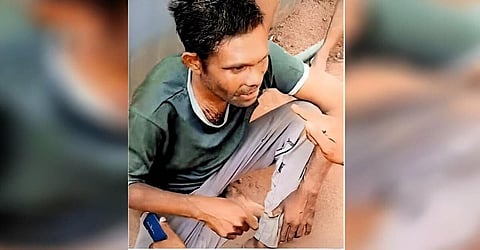
A dalit migrant worker was lynched to death in Walayar in Kerala.
Jamia Controversy: Students Outraged Over Dalit Professor's Suspension for Question on Muslim Atrocities, Signature Campaign Looms!

This is where caste returns—not as a relic, but as a sorting technology. Dalit and Adivasi migrants, particularly those with limited schooling and without “respectability markers” that dominant society reads as legitimate, are more easily converted into figures of suspicion. They are rendered hyper-visible as potential offenders, “thief,” “outsider,” “infiltrator”, and simultaneously invisible as citizens deserving due process. The Palakkad killing illustrates precisely this conversion: a worker’s mobility in search of employment is recoded into a story of illegitimate presence, and the crowd assumes the power to punish.

Kerala’s central problem, then, is not only labour governance; it is civic integration. Welfare measures aimed at “migrant labour” do not automatically translate into social membership. Language access remains limited; everyday interaction with local civic institutions is often mediated or absent; and “belonging” can remain conditional, available to some corridors, withheld from others. This gap between labour protection and social recognition creates the enabling conditions for vigilantism: mobs step in as territorial gatekeepers precisely where the state has not built robust, everyday integration.

It is in this context that the state’s continued defence of the term “guest worker” becomes constitutionally and morally unsettling. In a federal democracy, internal migrants are not guests; they are citizens exercising mobility as part of their livelihood and dignity. “Guesthood” converts citizenship into hospitality: it makes belonging feel temporary, revocable, and contingent on gratitude. In effect, it performs a symbolic downgrading of federal equality, one that attaches most readily to the lowest strata of labour, revealing how class and caste mediate the language of federalism.

Kerala’s own migration history clarifies the asymmetry. In the decades after Independence, Malayalis moved across India, often into service and professional occupations, and many settled as ordinary residents. They were rarely framed as “guests.” The difference is not movement; it is social location. Whether migration is read as settlement or intrusion depends on what kind of labour is performed, what identities are carried, and how the destination society allocates respect.

What we are witnessing, therefore, is a form of everyday asymmetric federalism: migrants are welcomed as workers but not recognised as equals; protected by policy in principle while exposed to social sanction in practice. For Dalit and Adivasi independent migrants, this asymmetry can become lethal. Mob violence emerges not merely from weak law enforcement, but from the coexistence of formal labour rights with informal civic exclusion—a regime where the worker is necessary, but the citizen is made negotiable.

Addressing this crisis requires moving beyond welfare-only approaches. Kerala, and India more broadly, needs a shift from “migrant management” to civic incorporation. This begins with language inclusion at scale and accessible local mediation systems. It also requires clear anti-vigilantism policing protocols and stronger enforcement of workplace standards. On housing and employment, the aim should be to reduce migrants’ vulnerability to contractor-controlled arrangements by expanding direct access to rentals, written job terms, and grievance support. Finally, public messaging must treat internal migrants as federal citizens, not temporary invitees.

- Dr. Madhusudan Nag is a Senior Researcher at the National Institute of Technology (NIT), Bhopal and holds a PhD in Economics from the Centre for Development Studies, Kerala. His research explores labour migration, political economy and inequality.

A dalit migrant worker was lynched to death in Walayar in Kerala.
Will 6 Lakh Trees Be Felled in MP? Uncover the Full Truth of Land Manipulation Masquerading as Environmental Conservation
A dalit migrant worker was lynched to death in Walayar in Kerala.
From UPSC Glory to 'Reel Star' Backlash: Is Barmer Collector Tina Dabi's Dalit Rise Under Siege?
A dalit migrant worker was lynched to death in Walayar in Kerala.
UPPSC 2025 Shock: 404 Posts, 243 for General, but ZERO for OBC? The ‘Missing Quota’ Mystery Explained

You can also join our WhatsApp group to get premium and selected news of The Mooknayak on WhatsApp. Click here to join the WhatsApp group.

The Mooknayak English - Voice Of The Voiceless
en.themooknayak.com