Discussion
The Cockroach as a Symbol of Resilience: Drawing a Parallel Between Nature and the resilient CJP-NEET Movement
One of the defining characteristics of any healthy democracy is accountability.

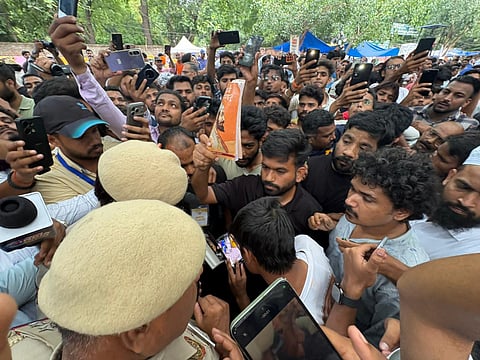

— ✍️ Dr Sandeep Dongre
Throughout history, social movements have adopted symbols from nature to communicate their philosophy, identity, and aspirations. The lotus, olive branch, dove, lion, elephant, and eagle have all represented different values. During the CJP-led NEET movement at Jantar Mantar, the cockroach emerged as an unconventional yet powerful symbol. While many people instinctively associate cockroaches with pests, biology tells a very different story. Cockroaches are among the oldest, most resilient, and most adaptable living organisms on Earth. The symbolism adopted by the movement sought to emphasize these characteristics rather than the common negative perception.
The following analysis explores the parallels between the biological characteristics of cockroaches and the Jantar Mantar movement's stated aspirations. These are symbolic comparisons rather than scientific claims about the movement itself.
1. Survival Against All Odds
Cockroaches have survived for over 300 million years, outliving dinosaurs and enduring dramatic climatic and ecological changes. Their longevity is not the result of strength or dominance but of their remarkable capacity to adapt.
The movement similarly sought to project persistence in the face of setbacks. Rather than relying on a single rally or demonstration, organizers attempted to maintain public attention over an extended period through peaceful sit-ins, public discussions, digital engagement, and symbolic acts. The underlying message was that change often requires sustained civic participation rather than a single event.
2. Small Individuals, Great Collective Strength
A single cockroach appears insignificant. Yet when viewed collectively, cockroaches demonstrate impressive ecological success because they survive, reproduce, and adapt as populations.
Likewise, the movement emphasized that millions of students and parents share concerns about examination integrity. Individually, one student's voice may appear limited, but collectively, peaceful civic participation can influence public debate and policy discussions.
The symbolism suggested that meaningful change emerges from the accumulation of many ordinary voices rather than reliance on a few powerful individuals.
3. Adaptability
Cockroaches inhabit forests, deserts, cities, caves, and homes. They modify their behavior according to changing environments and food availability.
Similarly, the movement combined multiple forms of engagement:
Peaceful sit-ins
Hunger strikes
Social media campaigns
Public lectures
Student testimonials
Cultural performances
Legal engagement
Rather than depending on one method alone, it adapted its communication strategies to reach different audiences.
4. Persistence
Cockroaches rarely abandon favorable environments. They continue searching for food and shelter despite repeated obstacles.
The protest conveyed a comparable message of persistence. Even when public attention fluctuated, organizers continued to hold discussions, update supporters, and encourage peaceful participation. Whether one agrees with the movement's demands or not, persistence was a visible element of its strategy.
5. Speed of Response
Cockroaches react extremely quickly to disturbances because of their sensitive antennae and nervous systems.
In the movement, organizers sought to respond rapidly to developments through press briefings, social media updates, and public statements. The goal was to keep supporters informed and maintain momentum in a fast-moving news environment.
6. Flexibility Rather Than Force
Cockroaches survive not because they overpower larger animals but because they avoid unnecessary confrontation, exploit available opportunities, and adapt to changing conditions.
The movement likewise relied primarily on non-violent methods. Instead of physical confrontation, it used fasting, speeches, symbolism, and peaceful assembly to communicate its message. This approach reflected the idea that persuasion and public dialogue can sometimes be more effective than confrontation.
7. Endurance
Cockroaches can withstand periods of food scarcity and harsh conditions better than many other insects.
The movement's use of prolonged sit-ins and hunger strikes sought to communicate endurance and commitment. These actions were intended as moral appeals rather than coercive measures, echoing traditions of non-violent protest in India.
8. Decentralized Presence
Cockroaches are found across almost every continent and in a wide variety of habitats.
Similarly, while the physical protest centered on Jantar Mantar, discussion about examination reforms spread through student networks, universities, social media, and local solidarity events in different cities. The movement's visibility extended beyond a single location.
9. Learning and Adaptation
Research suggests cockroaches can learn from experience and modify their behavior.
Successful civic movements also evolve. They refine their messaging, respond to public feedback, and adjust strategies as circumstances change. The ability to learn rather than rigidly repeat the same approach is an important characteristic of long-term campaigns.
10. Symbolism of the Ordinary Citizen
Cockroaches are among the most common creatures on Earth. They are not majestic or glamorous, yet they endure.
By adopting the cockroach as a symbol, the movement appeared to convey that ordinary citizens—particularly students and families without significant influence—deserve to be heard. The emphasis shifted from elite leadership to broad public participation.
Potential Lessons for Future Civic Engagement
If interpreted symbolically, the cockroach represents several qualities that many democratic movements may find valuable:
Resilience: Remaining engaged over time.
Adaptability: Using multiple peaceful methods of communication.
Collective action: Recognizing that many small contributions can have cumulative impact.
Persistence: Continuing dialogue even when progress is slow.
Learning: Adjusting strategies in response to changing circumstances.
Non-violence: Seeking influence through persuasion rather than force.
These qualities are not unique to any one movement but are common features of many successful campaigns for social or institutional reform.
One of the defining characteristics of any healthy democracy is accountability. Governments derive their legitimacy from the people, but they also remain accountable to them. A government with a comfortable parliamentary majority often enjoys the stability needed to implement long-term reforms. However, such stability also places a greater responsibility on those in power to remain responsive to public concerns. Equally important is the role of a constructive and effective opposition, whose purpose is to scrutinize government actions, raise issues of public importance, and ensure that democratic institutions function as intended.
It was in this backdrop that Abhijeet Dipke and the Cockroach Janta Party (CJP) unexpectedly entered the national discourse. Until the NEET examination controversy, neither Dipke nor CJP was widely known outside a limited circle. Yet, within weeks, the movement captured national attention, largely because it focused on an issue that resonated with millions of students and parents across India.
At the heart of the movement was an idea that echoes one of Dr. B. R. Ambedkar's most enduring calls to action: "Educate, Organize, Agitate." While Dr Ambedkar articulated these words in the context of constitutional rights, social justice, and democratic participation, the CJP movement sought to interpret them in the context of educational accountability and examination reforms. Dipke is a true follower of Dr B. R Ambedkar's core philosophy . Whether one agrees with every aspect of the movement or not, it consciously projected itself as being inspired by the principles of peaceful organization, public awareness, and democratic engagement.
The movement demonstrated an extraordinary ability to organize. Thousands of students from different regions, languages, economic backgrounds, and social identities found common ground in a single demand—a fair, transparent, and accountable examination system. Unlike many movements that are built around political personalities or electoral considerations, this one attempted to place students and the future of education at its centre.
The agitation was equally noteworthy. It largely remained peaceful and disciplined, relying on methods such as public demonstrations, hunger strikes, speeches, constitutional symbolism, social media campaigns, and continuous engagement with citizens. In many ways, the movement sought to keep its methods aligned with India's rich tradition of non-violent democratic protest.
A significant turning point came when Sonam Wangchuk, one of India's most respected education reformers and social innovators, joined the movement. His participation elevated the issue from being perceived as a student protest to becoming a broader national conversation on education and institutional accountability. His moral stature, built over decades of work in education and sustainable development, lent credibility and wider public visibility to the campaign.
Alongside him, Saurav Das, serving as one of the movement's principal spokespersons, played an important role in communicating the movement's objectives, responding to developments, and engaging with both the media and government representatives.
Perhaps the most remarkable feature of the movement was its ability to mobilize Generation Z. Today's youth are often described as digitally connected but politically disengaged. The CJP movement challenged that perception. Students responded with remarkable enthusiasm, volunteering their time, participating in peaceful demonstrations, creating digital content, organizing discussions, and amplifying the demand for examination reforms across social media platforms.
The movement also appeared to transcend many of India's traditional fault lines. Participants from diverse religious, linguistic, regional, and political backgrounds assembled under a common banner demanding fairness in education. Throughout the protest, there were allegations and counter-allegations from different quarters attempting to assign political or ideological labels to the movement. Yet many participants consistently emphasized that their primary concern remained the integrity of India's examination system rather than partisan politics. Whether this perception was universally shared or not, the movement projected unity as one of its defining values.
Another important lesson emerging from the movement is that clarity of purpose matters. Successful civic campaigns generally depend on a combination of clearly articulated goals, broad public support, institutional engagement, respect for legal processes, and constructive dialogue. The CJP movement sought to build each of these pillars by maintaining continuous communication with supporters while simultaneously engaging with democratic institutions.
The movement also revived a larger democratic conversation about accountability. Accountability is not merely about assigning blame; it is about ensuring that institutions remain transparent, responsive, and open to public scrutiny. In democracies, citizens periodically remind those in authority that public office ultimately carries public responsibility. Student movements throughout history have often served as catalysts for such conversations, and the NEET protest became one such moment in contemporary India.
Conclusion
The cockroach is one of nature's most enduring survivors—not because it is the strongest or most celebrated creature, but because it adapts, persists, learns, and survives across changing environments. As a symbol, it conveys resilience, flexibility, and the capacity of ordinary beings to endure extraordinary challenges.
In that symbolic sense, the CJP movement sought to present itself as a citizens' movement driven by persistence rather than power, collective participation rather than hierarchy, and non-violent engagement rather than confrontation. Whether one agrees with its goals or methods, the metaphor highlights an enduring lesson: lasting democratic change often depends less on dramatic moments than on sustained, peaceful participation by ordinary people over time.
The cockroach, viewed through this lens, becomes not a symbol of nuisance but of endurance—an emblem suggesting that determined citizens, acting collectively and peacefully, can continue to press important public issues into the national conversation.
-The author is a Senior Corporate Leader, Educationist & Social Activist.
You can also join our WhatsApp group to get premium and selected news of The Mooknayak on WhatsApp. Click here to join the WhatsApp group.
'The Mooknayak' practices democratic journalism. It is a media platform committed to the Constitution, democracy, and social justice. If you also want 'The Mooknayak' to always raise the voices of the marginalized and show the pain of the voiceless, please subscribe.
PLEASE SUBSCRIBE US