Discussion
The Architecture of Exclusion: The 2026 UGC Equity Rules and Breaking the Walls
Examining the Legal Framework, Historical Context, and Moral Imperative for Educational Justice


— ✍️Prakash Priyadarshi
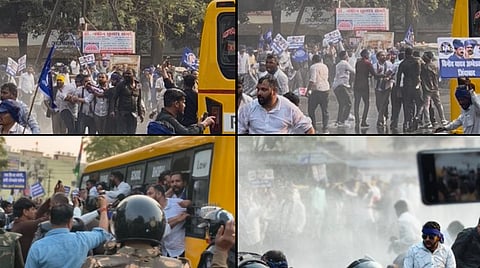
On January 13, 2026, the University Grants Commission (UGC) notified the University Grants Commission (Promotion of Equity in Higher Educational Institutions) Regulations, 2026, replacing the 2012 Regulations and marking what proponents called a watershed moment in India's pursuit of educational justice. Yet barely two weeks later, on January 29, the Supreme Court stayed these regulations following a challenge petition. This legal development has reignited one of India's most contentious debates: the role of equity measures in higher education and their relationship to merit, excellence, and historical justice.
The controversy surrounding these regulations cannot be understood in isolation. It represents the latest chapter in a centuries-old struggle over who has the right to knowledge, who gets to define merit, and how institutions address historical injustices that continue to shape educational access today. This article examines both the legal framework of the 2026 regulations and the deeper historical architecture of exclusion they seek to address.
The 2026 Regulations, notified under the UGC Act of 1956, explicitly aim to promote equity and inclusion while eradicating discrimination against stakeholders belonging to Scheduled Castes (SCs), Scheduled Tribes (STs), socially and educationally backward classes, economically weaker sections, and persons with disabilities in Higher Educational Institutions (HEIs).
These regulations represent more than administrative updates. They embody a vision of higher education that acknowledges India's Constitutional promise of social justice and equality—promises enshrined in Fundamental Rights and Directive Principles yet often remaining rhetorical for marginalized communities. The judicial challenge and subsequent stay by the Supreme Court underscore the contested nature of equity measures in a society where dominant groups have long controlled institutional spaces.
The deaths of Rohith Vemula in 2016 and Payal Tadvi in 2019 by suicide shook the country to its roots. These were not isolated incidents but compelled a national confrontation with systemic caste-based discrimination faced by students in higher educational institutions. Vemula's suicide note spoke of his "birth being a fatal accident"—an internalization of worthlessness that institutional casteism systematically engineers.
As documented by scholars like Sukhadeo Thorat, caste discrimination in universities is not a relic of rural India but saturates urban institutions, particularly those that pride themselves on being "progressive." His empirical studies meticulously document discrimination in hiring, promotion, and institutional culture, demolishing the myth that merit exists in a vacuum separate from social identity.
These tragedies reveal what Gopal Guru identified as "institutional undemocracy"—the phenomenon where formal democratic structures exist, but institutions themselves remain undemocratized, controlled by dominant castes who wield informal power to exclude and humiliate. Universities may nominally implement reservations, but everyday functioning—from hiring committees to hostel allocations, from curriculum design to mentorship networks—reproduces caste hierarchy.
To understand the urgency of equity measures, we must reckon with the lived brutality of caste's enforcement. The breast tax (mulakkaram) extracted from Dalit women in Travancore represents a particularly grotesque intersection of caste, gender, and bodily control. Lower-caste women were taxed if they dared to cover their breasts—an act of basic dignity reserved as a privilege of upper-caste women.
When Nangeli, a Dalit woman from the Ezhava community, refused to pay this humiliating tax in the 1800s, she cut off her own breasts and presented them to the tax collector, dying from blood loss shortly after. Her husband Chirukandan threw himself into her funeral pyre, unable to bear the brutality. This was not an isolated atrocity but representative of a system that commodified and controlled the very bodies of lower-caste women.
Alongside such taxation existed related forms of bodily regulation: the forced practice of broom-sticking, where lower-caste individuals had to tie brooms to their backs to erase their "polluting" footprints; the mandatory carrying of earthen pots around their necks to contain their "impure" saliva. These were not medieval aberrations but systematic technologies of dehumanization that persisted well into the 20th century. These practices constructed entire populations as ontologically inferior, unfit for intellectual pursuits, condemned to hereditary occupations.
Philosophically, this construction rested on a perverse metaphysics that equated being with purity and non-being with pollution. Dalit-Bahujan communities were rendered not merely inferior but ontologically deficient—their very existence conceived as contamination. This was not simply social stratification; it was a cosmic ordering that denied the fundamental equality of human existence itself.
This ontological exclusion found material expression in complete dispossession of natural resources. Dalit and Adivasi communities, despite being original stewards of land and forest ecosystems, were systematically denied ownership and access. Colonial land settlement acts formalized what caste custom had already established: that certain communities could not own productive land.
Today, Dalits constitute over 16% of India's population but own less than 10% of agricultural land. Adivasis, comprising 8.6% of the population, have been progressively alienated from forests that sustained them for millennia. The 2006 Forest Rights Act remains largely unimplemented; land ceiling laws are violated with impunity; Adivasi lands continue to be transferred to corporate entities.
Educational exclusion and material dispossession operate as conjoined mechanisms: communities denied land and livelihood cannot invest in education, while educational deprivation ensures continued economic marginalization. The 2026 UGC equity rules must be understood against this backdrop of compounded historical injustice.
Dr. B.R. Ambedkar astutely observed that the caste system's rigidity, its obsessive concern with pollution, and its fragmentation of society into sealed compartments made India vulnerable to conquest. A society that kept 85% of its population illiterate and denied them weapons training or collective organization could not mount effective resistance. The British did not have to divide India; caste had already accomplished that task with devastating efficiency.
Today, we face a different but equally insidious form of colonization—educational colonization. When Indian institutions adopt Western models uncritically while simultaneously maintaining caste hierarchies, when they celebrate "global standards" that conveniently exclude historically marginalized communities, when foreign universities establish branches that cater primarily to elite castes, we witness the reproduction of colonial dependency.
Private universities, increasingly partnered with Western institutions, become spaces where economic capital and caste privilege converge, pricing out precisely those communities for whom public education represents the only pathway to mobility. The same "merit" discourse that opposes equity measures facilitates this new subjugation.
Jyotirao Phule identified in the 19th century what he called the Brahminical monopoly over knowledge systems—a monopoly that justified itself through elaborate mythologies of intellectual superiority while denying education to the majority. Critics of the 2026 regulations invoke "merit" with almost religious fervor, as if the concept exists in a historical vacuum, untainted by centuries of systematic exclusion.
The question we must ask is not whether equity compromises merit, but rather: whose merit has historically been recognized, validated, and rewarded in Indian institutions of higher learning? Dr. Ambedkar, who despite holding doctorates from Columbia and the London School of Economics faced humiliation in Indian universities, understood that caste operates through both spectacular violence and mundane bureaucratic exclusion.
His concept of "graded inequality" remains devastatingly relevant. The institutional structures that denied him water, that refused his scholarship, that questioned his intellectual capabilities—these were not aberrations. They were, and remain, features of a system designed to reproduce caste hierarchy through the language of merit.
As Gail Omvedt documented in her pathbreaking work, reservations and affirmative action are not "special privileges" but minimum reparations for millennia of enforced illiteracy, of knowledge systems destroyed, of intellectual traditions erased. The opponents of equity measures conveniently forget that upper-caste communities have benefited from an unbroken 3,000-year reservation system—one that required no legislative justification because it was sacralized through religious texts.
The Supreme Court's stay on the 2026 Regulations presents both a challenge and an opportunity. As legal scholars have noted, the ongoing judicial proceedings present an excellent opportunity to refine the framework of the Regulations to ensure constitutional soundness and institutional effectiveness. Any future endeavor must remain oriented towards progression rather than regression.
The Constitution's promise—embodied in Fundamental Rights and Directive Principles—of social justice and equality remains largely rhetorical for marginalized communities. Article 15's prohibition of discrimination and Article 46's directive to promote educational interests of weaker sections find little translation into lived reality when institutions lack internal democratization.
Periyar E.V. Ramasamy's insight that education is a site of both oppression and liberation animates the urgency of these regulations. He recognized that formal education in its colonial and Brahminical iterations served to naturalize inequality, to teach Dalit-Bahujan children that their subordination was deserved. The tragic deaths of Rohith Vemula and Payal Tadvi are not unfortunate exceptions—they are logical outcomes of a system that views certain bodies as inherently unsuited for intellectual work.
The 2026 UGC equity rules represent a modest attempt to address centuries of structural violence. Those who oppose them invoke excellence while ignoring how excellence has been defined by and for dominant castes. The debate cannot be about whether equity undermines merit; it must be about creating conditions where merit can actually be recognized across caste lines.
Until every institution reckons with its complicity in deaths like Rohith Vemula's and Payal Tadvi's, until we acknowledge that the same purity-pollution logic that enabled our colonial subjugation now facilitates our educational colonization, until we address the continued dispossession of land and forest resources that compounds educational exclusion, until we build the institutional democracy that Gopal Guru envisions—equity measures are not only justified, they are a moral imperative.
The architecture of exclusion was centuries in the making, built on philosophical foundations that denied the equality of being itself, enforced through unspeakable violence like that suffered by Nangeli, materialized through dispossession of resources, and sustained through institutional undemocracy. Dismantling it demands nothing less than our sustained commitment to social justice—not as abstract ideal, but as lived practice in every classroom, every hiring decision, every curriculum choice.
The 2026 UGC rules are a small step toward honoring the constitutional promise that has remained deferred for far too long. As the Supreme Court deliberates on their validity, we must remember that the question is not merely legal or administrative—it is fundamentally about what kind of society we wish to build, and whether we have the moral courage to confront the historical injustices that continue to structure our present.
- Prakash Priyadarshi is an Assistant Professor at Vignan University, Andhra Pradesh.
You can also join our WhatsApp group to get premium and selected news of The Mooknayak on WhatsApp. Click here to join the WhatsApp group.
'The Mooknayak' practices democratic journalism. It is a media platform committed to the Constitution, democracy, and social justice. If you also want 'The Mooknayak' to always raise the voices of the marginalized and show the pain of the voiceless, please subscribe.
PLEASE SUBSCRIBE US