No Land, No Belonging: Singara Chennai, Dalit Evictions, and the Urgent Call for Reclamation

In this city, there is no two tumbler system, no separate cremation grounds for different castes, no separate wells for Dalits. Yet, the native inhabitants of this soil are considered untouchables, unfit to live in the central part of the city.
Symbolic Image
Symbolic ImageSource-OpenDemocracy
Published on

— ✍️ Shalin Maria Lawrence

The concept of "home" extends far beyond the materiality of bricks and mortar. It is a nest of emotions, woven and knitted with blood and nerves." When the security of this home is fractured, whether at the micro-level of a single dwelling or the macro-level of a city, it precipitates a crisis of identity and belonging. This is a first-person testimony which examines the multifaceted trauma of displacement in a rapidly modernizing Indian metropolis. I dwell into the personal anguish of leaving a beloved house to the collective grief of our community witnessing the systematic erasure of its cultural and historical landscape. The "beautification" of the city, rather than being a universally celebrated development, is a violent process that displaces the natives of Madras and sanitizes history, raising critical questions about who the city is for and what it means to be a "native" in one's own land.

This article is an autoethnographic testimony from a native Dalit woman. It contends that the "Singara Chennai" beautification project and the city's approach to urban development are contemporary manifestations of a centuries-old casteist project. By juxtaposing the lived experience of cyclical flooding in North Chennai's cheris (Dalit colonies) with the systemic erasure of Tamil-Dalit history, I argue that the state, across political parties, actively produces crises to alienate the native from their city, creating a landscape of what I term modern untouchability.

Historical Continuum: From ‘Black Town’ to ‘Singara Chennai’

Chennai's original name is Perumparaicheri, a tapestry of fishing hamlets, cheris, groves, and wetlands. The city's modern history begins with a act of segregation: the East India Company building its Fort and creating the "Black Town," systematically dividing the native from the colonizer. This was the first great displacement.

Post-independence, this model of segregation was perfected not by a foreign power, but by our own governments in the name of "development." The Dravidian political parties, whose rise to power was built on the "sweat," "blood," and the “fan whistles” of the poor during rallies, have now become the new rulers. They discovered that "everyone are the kings of this nation" only applied to the political class, not to the common people. The city they built with our labour is now being taken from us, piece by prime-location piece.

The Engineered Disaster: Floods as a Political Tool

In North Chennai, rain does not mean poetry or pakoras; it means fear. Our lived reality reveals that floods are not natural but politically orchestrated events.

The Lived Experience of Deluge


From childhood, we are trained in flood management. My mother was our weather department, announcing, "The first step has been reached!" We would spend nights moving certificates, my mother's wedding silk saree, and books to higher shelves. The water that enters our homes is not just rainwater; it is a vile mix of sewage, carrying human waste. We would sit on our beds in the dark, fearing electrocution or snakebites, waiting for dawn. The state's response was perpetually delayed and dehumanizing, offering shelter in crowded community halls with unhygienic food, mostly just overly boiled ,semi solid lemon rice and sambar rice.

The Political Economy of Neglect


The question is not why the cheris flood, but why the state refuses to fix the infrastructure. The answer is a brutal political calculus: by allowing the floods to persist, they make life in the cheris unlivable. When we, exhausted, move out—"Why should we leave the main area?"—our prime-location lands are freed up. These are then gifted to North Indian corporates or Marwari businessmen at the cost of the natives. The government's Housing Board resettlement colonies, like those in Kannagi Nagar or Perumbakkam, are not solutions; they are dumping grounds, often more vulnerable and isolated, leading to starvation and death. This is nothing short of ethnic cleansing.

Modern Untouchability: The Casteist Urban Makeover

The displacement is not only physical but also cultural and economic, creating a pervasive system of modern untouchability.

Shalin Maria (L) in  the panel at "Conference on Land and politics " organised by All India forum for women intellect" headed by  Dr. P. Sivakami, in March 2025.
Shalin Maria (L) in the panel at "Conference on Land and politics " organised by All India forum for women intellect" headed by Dr. P. Sivakami, in March 2025.

The Housing Apartheid


I have changed 13 houses so far .What that means to me ?

You see, a house is not just stones and mortar. For people like me, who feel too deeply, it is a living, breathing thing—a nest of emotions, woven and knitted with my own blood and nerves. The last house has laughed with me. It had cried with me. On that darkest day when I shoved handfuls of sleeping pills into my mouth, this house wailed, and its silent scream woke others, saving me. A house is not inanimate. Leaving it is not like leaving a person; it is an amputation. It is cutting off a part of my own body, leaving it behind, and trying to walk away. This trauma serves as a microcosm for the larger, collective experience of the city's native inhabitants, framing the subsequent analysis of urban change not as an abstract policy issue, but as a deeply felt, human wound.

The Crisis of Native Identity and "Modern Untouchability"

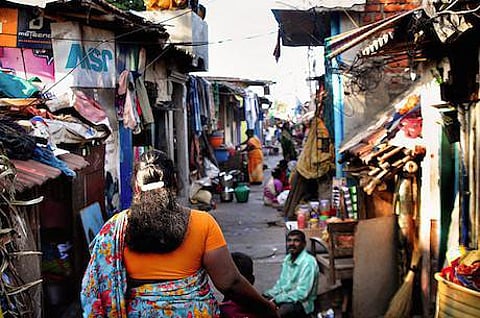
Now let’s look at the question of identity and belonging . I am an indigenous person of this land . A Paraiah women ,who finds herself alienated in her own land . The search for a new house becomes an exercise in humiliation, revealing deep-seated discrimination. In my Chennai, apartment complexes have increased. Wherever you go, there are beautiful buildings surpassing the height of the Qutub Minar. Glass mansions. I have the means and opportunity to move into them. But I cannot.

My search for a new house in my own native city Chennai is an exercise in humiliation. Brokers ask, "Madam, are you a Jain?" To rent a home, I must not be myself. I cannot be a Tamil, a meat-eater, a Dalit. My Chennai—the North Chennai that I am a native of—is now dominated by North Indian businesses. It's been many years since the Periyar Thidal (the alleged Panchami land where Periyar created his empire) have been looted in a modern Northern style. On that road where the Periyar Thidal is, 90% are Marwaris; there is no meat shop in that vicinity. For every ten feet, there is a Patanjali store,if you speak in Tamil, they look at you contemptuously and move on.Every nook and corner of North Madras are in the hands of the North Indians. That area which was celebrated for its Hindu, Muslim, and Anglo-Indian unity and diversity today presents a saffron spectacle.

In this city, there is no two tumbler system, no separate cremation grounds for different castes, no separate wells for Dalits. Yet, the native inhabitants of this soil are considered untouchables, unfit to live in the central part of the city. Modern Chennai. Modern untouchability. This systemic exclusion can be framed as a form of modern untouchability.While the city is filled with new imported cars and modern coffee shops,but for the native inhabitants of this soil, there is no place here to lay their heads.

The city our ancestors built with their labour and their blood is no longer ours. This sentiment is amplified by the visible cultural shift: the proliferation of North Indian businesses, Jain temples, Patanjali stores, and the decline of traditional Tamil markets and non-vegetarian eateries. The city's landscape is being rewritten to exclude its original inhabitants, making them feel like untouchables, unfit to live in the central part of the city.

The Erasure of History


Concurrent with this demographic shift is the systematic destruction of our history. In the name of beautification, sites of immense Tamil and Dalit significance—the Binny Mill, the birthplace of India's first trade union, the grounds walked by leaders like Singaravelar and M.C. Rajah—are being demolished. These places, which once spoke Tamil and embodied anti-caste revolution, now "speak Hindi." The Marwaris are building "modern Agraharams" and caste hierarchies on the graves of our history. This erasure is epistemological; it ensures the next generation will not know its own heroes or its own past.

The City as a Home: Nostalgia and the Specter of Demolition

The definition of "home" encompasses the entire city, chronicling a Chennai that is disappearing. My nightly rituals with the Marina Beach are emblematic of a personal, lived connection to the urban space. I vividly remember the marginalized, life in neighbourhoods like those along Ritchie Street and Chintadripet—the men playing carrom under a single bulb, the people playing with street dogs, the raw, unfiltered humanity of the city. This nostalgic cartography violently contrasts with the aftermath of the state demolition: "No shops, no those people. Just silence." The "beautified" city is revealed to be a sterile, silent space, a "Singara Chennai" built on the rubble of homes and communities.

This poses a series of urgent, rhetorical questions that highlight the human cost of this development:

· Where will the people living in the houses razed to the ground in a single day go?"

· Will they eat that day?

· Where will they sleep at night?

· How will they travel 40 miles (where they have been resettled )to their place of domestic work tomorrow?"

· Where will the children study now ?

· How will they get used to the taste of water in unfamiliar corners of the city?

These questions remain hauntingly unanswered, revealing the administration's disregard for the lives it disrupts. Their situation is "just like the state of birds who have lost their nests when a tree is cut down."

There is a pain greater than losing a home. It is losing one's identity. Losing one's city

Conclusion: Beyond Whistles—Towards a Madras Revolution

Our people have been reduced to a "whistle-blowing crowd" for political parties, celebrating when a leader gives them a bag of groceries. The regime changes, the spectacle changes, but our people remain in the same filthy water, fighting the same floods.

The solution is not in changing the party in power but in changing the political consciousness of the people. We must teach our communities to ask counter-questions, to demand their rights. We must be taught land-rights politics. We must thump our chests and declare, "I am the native!" We must talk more, fight more. The spirit of struggle is in our blood. A "Madras Revolution" is coming. It must.

For now, the pain is total. They have taken our homes. They are taking our city. They are erasing our history. We are left with a scream building inside, a need to howl at midnight: "Hey... this is my town, man! This is my language! I eat beef! I love the smell of dried fish! This is my father's town!"

But a scream is not enough. It must become a roar.

- Shalin Maria Lawrence is a Chennai-based author and feminist activist. This article is based on her speech, which was published in the compendium of the All-India Conference held in New Delhi recently on "Land Justice Now: Safeguarding Marginalized Communities and Advancing Equitable Distribution."

You can also join our WhatsApp group to get premium and selected news of The Mooknayak on WhatsApp. Click here to join the WhatsApp group.

The Mooknayak English - Voice Of The Voiceless
en.themooknayak.com